



Full-arch treatment leaves little room for learning record capture, design communication, and prosthetic delivery by trial and error during a live case. A focused digital denture CE course gives clinicians and technicians a repeatable workflow before those decisions affect fit, chair time, or patient confidence.
Contact AvaDent for current course dates and details.
A digital denture CE course prepares dentists for full-arch treatment by connecting clinical records, digital design communication, prosthetic evaluation, and delivery into one repeatable protocol. Structured training helps the dentist, assistant, and technician understand which records drive the design and where to verify accuracy before manufacturing. That shared protocol can reduce preventable remakes and chairside adjustments while giving the team a clearer path from conventional dentures to implant-supported cases.
Doctors can learn individual tools on the job, but full-arch cases demand more than software familiarity. The more important skill is knowing what to capture, what to communicate, and what to verify at each clinical handoff.
Why a digital denture CE course matters before full-arch treatment
A digital denture CE course helps a practice replace disconnected techniques with a defined clinical and laboratory protocol. The team learns how records, design approvals, and delivery checks work together before moving into more complex full-arch care. That foundation supports more predictable case communication and fewer surprises at insertion.
Building a strong base for complex cases
You can find many ways to start using digital tools in your office. Some doctors try to learn as they go, but this can lead to mistakes. Taking comprehensive digital denture training programs is a safer path. These courses teach you how to pick the right cases and set up a plan that works. You will learn which patients are good for digital parts and which ones may need a different plan.
Training helps you build long-term skills for making dental parts. One study shows that digital training modules help students gain the skill they need for complex designs. When you know the basics, you can move on to full-arch cases with more trust in your work. You will know how to get the best scans and data from the start.
Better clinical results and precision
Digital records make critical information easier to review before manufacturing begins. The clinician and technician can evaluate the planned prosthesis, confirm that the records support the design, and resolve questions before delivery. That review point is what makes a digital workflow valuable: it moves corrections upstream, where they are usually easier to manage than at the insertion appointment.
Software is a key part of this change. Research shows that using CAD software in training helps doctors learn digital steps fast. These tools let you see the final result before you start the work. You can review the planned result and discuss it with the patient before manufacturing. This creates a clearer approval point and helps the team identify questions earlier.
A smooth full-arch workflow
A good course also shows you how to save time. New digital workflows are fast ways to make dental parts. They cut down on the number of visits a patient needs. This helps your practice grow while giving better care. You can finish cases in fewer steps, which means less stress for you and your team.
Clear talk with your team and the lab is also vital. In a CE course, you learn how to use digital files to share data fast. These files make it easy to get new parts if a patient loses theirs. You can just send the file to the lab again. By learning these steps now, you set your practice up for long-term growth in full-arch care.
Inside AvaDent's 14-credit Digital Dentures course
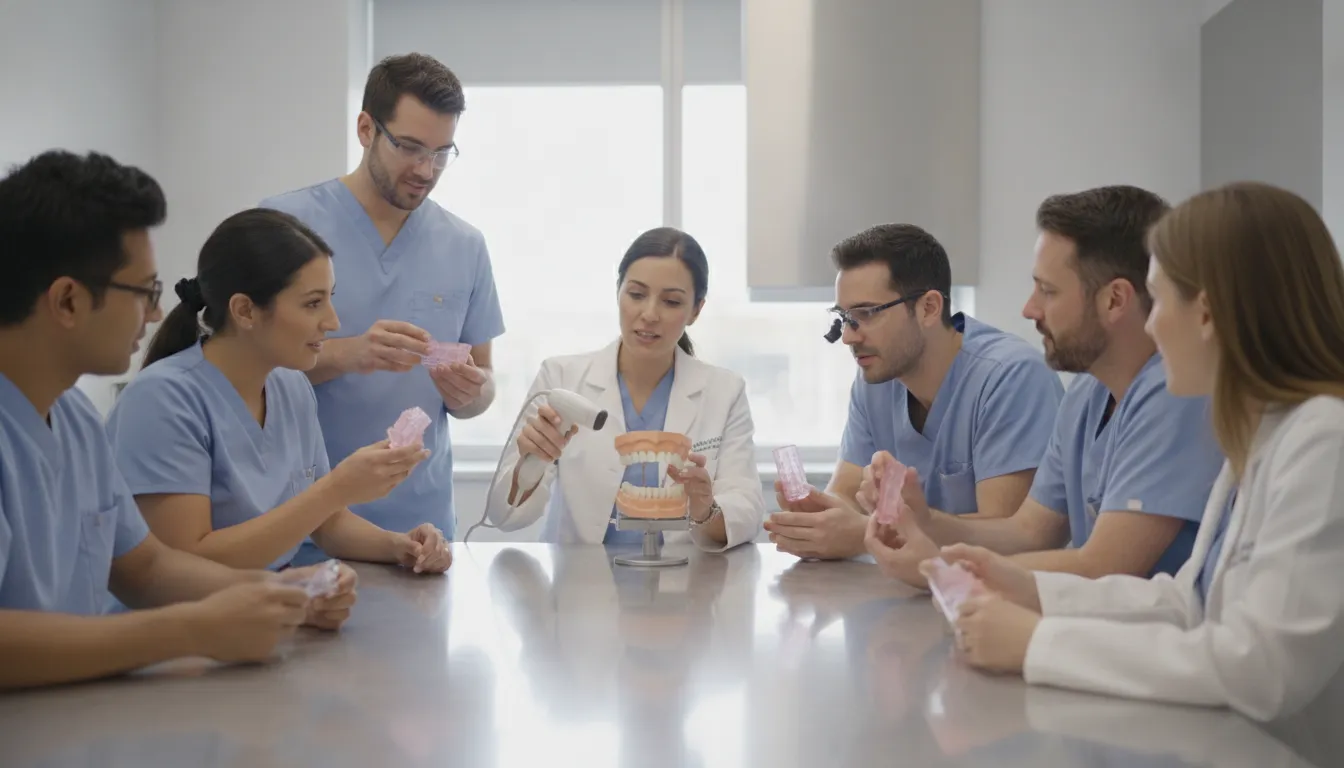
AvaDent's Digital Dentures: A Comprehensive Review Course is a two-day, in-person program for doctors, educators, and technicians that provides 14 PACE-approved CE credits. Held at AvaDent's Scottsdale headquarters, the course examines the complete clinical workflow rather than treating scanning, design, and delivery as isolated techniques. Participants build a practical framework for evaluating records, communicating with the laboratory, and reviewing the prosthesis before the final fit.
Learning from denture experts
Board-certified denture experts lead every session. They share tips from years of work in the clinic and the lab. The school uses a neutral path. This means you learn about all major digital denture systems on the market. You are not stuck learning just one brand or tool. This open view helps remove the fear of moving to new tech. Students see how many tools can work together to get the best results. Using CAD software in early training is a key part of building skill with digital steps.
Hands-on time is a big part of the Scottsdale course. You will work with the latest scanners and design software. This helps you know the data you get from patients. You will learn how to check for errors before the denture is made. This step is vital to make sure the final teeth fit well. The experts show you how to handle tough cases that used to take many hours. You will see how digital tools make these tough jobs much easier to manage.
Full tools for your team
The course is just the start of your learning path. Students also get access to more than 100 training videos. You can watch these at home or in your clinic whenever you need a refresher. You also get seven clinical guides that you can download and print. These comprehensive digital denture training programs help your whole staff work as a team.
Key tools you will get include:
- Over 100 training videos for on-demand review.
- Seven clinical protocols to guide your workflow.
- Digital file storage tips to help with fast denture replacement.
When your whole team knows the workflow, your office runs better. The training covers how to store digital files safely. These files are a big win for your patients. If a patient loses or breaks a denture, you can make a new one fast. You do not need to take new molds or start from scratch. This saved data makes your practice stand out. It shows patients that you care about their long-term comfort and peace of mind.
Better fit and more profit
Moving to digital tools can help your dental practice grow. You will see fewer chair-side changes once you master the new workflow. Digital design allows for an exact fit more than old hand-made steps. This means the dentures you give patients will fit better the first time. Fewer visits for fixes mean more time for new patients. This shift helps boost your clinic's profit. You can do more work in less time without losing quality.
Happy patients are the best way to grow your business. Patients love that they spend less time in the chair. They also like knowing their teeth are made with high-tech tools. The course teaches you how to show this value to your local market. You can show your clinic is a leader in modern care. This advanced digital dentistry clinical training leads to better care for your patients and a strong clinic for you.
Which digital denture training format fits your team?
Adopting digital workflows can help your dental practice work better and faster. Research shows that digital workflows are efficient options to old ways of making dental tools. But every team learns in a different way. Finding the right digital denture CE course or training path is the first step toward clinical success. You should pick a format that fits your busy schedule and your goals for your practice.
Structured learning in a formal course
A full course gives your team a deep look at new methods. These programs often use 3D tools to help students learn fast. Studies show that 3D simulation training helps students build skills that last a long time. These courses are best if you want to master every part of the process at once. They give you a clear path to follow and expert help when you have questions.
Practical training with expert advice
Some teams do best with one-on-one help from a pro. Talking to a prosthodontist can help you solve specific problems in your clinic. This type of learning is very flexible. It lets you focus on the exact parts of the Full Arch Master Course or daily workflow that you find hard. It is a good choice for teams that already know the basics but want to get better at complex tasks.
Video lessons and protocol guides
Self-led learning is great for teams that need to learn at their own pace. You can use clinical resources like video libraries and download guides. These tools let you review steps as many times as you need. This format works well for staff members who need to learn specific tasks without leaving the office. It keeps your team up to date without the cost of travel or long days away from patients.
| Training Format | Best Use Case | Main Benefit | Possible Limits |
|---|---|---|---|
| Structured Course | Full team training | End-to-end workflow | Scheduled attendance |
| Prosthodontist Consultation | Specific clinical questions | Expert case guidance | Narrow case focus |
| Video Training | Targeted refreshers | On-demand review | No live feedback |
| Protocol Downloads | In-office reference | Repeatable checklists | Limited demonstration |
The right training format depends on the gap your team needs to close. A live course works well when clinicians and technicians need an end-to-end workflow and direct feedback. Video lessons and protocol downloads support focused refreshers, while a prosthodontist consultation can help the team think through a specific clinical decision. Combining these formats makes education easier to apply after the course ends.
How to move from denture fundamentals to full-arch cases
Moving from basic digital dentures to full-arch cases takes a clear plan. You need a path that builds on what you know. This shift helps you offer better care to your patients. It also helps your office work more smoothly. Each step adds new skills, from simple scans to complex implant cases.
Building a foundation in digital workflows
The first step is to master the basics of the digital denture workflow. This starts with getting good at intraoral scanning. Using digital tools helps make your results more sure and precise. When you take a digital denture CE course, you learn how to handle data and design with care. These steps reduce the need for many chair-side changes later.
Good training should cover all digital systems. This way of learning helps remove hurdles to using new tools in your office. Learning how to use CAD software during your early training is a key way to build your skills. It gives you the trust to start taking on more complex tasks. You can learn more through advanced digital dentistry clinical training that focuses on these core skills.
Mastering full-arch treatment paths
Once you know the basics, you can move toward full-arch cases. These cases often involve implants and more complex design work. Research shows that digital workflows are efficient ways to make devices like implant overdentures. This step is where you begin to see how digital tools save time. They also help the fit for your patients. It also opens the door to higher office profits.
The path to mastery involves a mix of study and hands-on work. You can move from basic courses to advanced hybrid programs. These programs teach you how to handle full-arch cases with less invasive methods. By following a set path, you can offer more options to people who need full-arch care. You can find more full-arch prosthetic treatment education to help guide your choice for each patient.
-
Complete a basic digital denture CE course to learn how to scan and design with digital tools.
-
Use your new skills in your daily work to get used to digital impressions and workflows.
-
Take an advanced course like the R2 Full Arch Master Course to learn about implant dentistry and full-arch cases.
-
Start your first full-arch case with the help of clinical guides to ensure success.
-
Keep your skills sharp by using training videos and clinical resources to stay up to date on new methods.
Next steps for your practice
Moving into full-arch work is a big step for any dental team. It requires the right education and a push to learn new tech. Digital dentures provide a strong base for this growth. With the right training, you can move smoothly from simple dentures to complex full-arch cases. This path not only helps your patients but also builds a more modern and efficient dental practice.
Build a repeatable digital denture workflow after training
Taking a digital denture CE course is just the first step. To see real gains, you must bring what you learned back to your office. A good plan helps your team move from old ways to a modern system. Research shows that digital dental workflows are often faster and better than old methods. You need to set clear rules for how you handle each case from start to end.
Staff roles in the digital practice
A smooth flow starts with the right people in the right spots. Each staff member needs a clear job to do. Assistants can take over the task of scanning and file work. This lets the dentist focus on the patient and the final fit. Technicians work on the design to make sure the denture is strong. Everyone must know how to use the tech tools in the office. This team effort makes the whole day run better for everyone.
You may also want to work with dental experts to keep your team sharp. These experts can teach your staff new tricks as the tech changes. Regular training makes sure no one falls behind. When each person knows their part, the work gets done fast. You can learn more through comprehensive digital denture training programs that cover these team roles.
Clinical rules for digital cases
To get the best results, you must have a set of rules for every case. These rules cover how you take impressions and how you check the fit. Digital tools make it easy to follow the same steps every time. This leads to fewer errors and less time at the chair for your patients. When you have a set path, you can spot and fix problems fast. This makes your digital dentistry clinical workflows more stable and good for profit.
Your team should use a checklist for each new case. The list should cover the first talk with the patient through the final check. This keeps the work on track and makes sure you do not miss a step. Having a clear path reduces stress for you and your staff. It also helps patients feel more sure about their care. A solid set of rules is the key to a calm and smooth office.
- Use intraoral scans for the first records.
- Save all files in a safe digital spot.
- Check the design with the lab before you print.
- Review the final fit with the whole clinical team.
Digital files for better results
One big benefit of digital work is how you save and use files. Stored digital files for dentures make it simple to get a new set if the old ones break. You do not need to take new impressions for most simple repairs. This saves time for you and keeps the patient happy. Digital records also let you look back at past cases to see what worked best. You can use these files to plan future cases with more skill.
Reviewing your past work helps you learn and grow. You can see patterns in how cases go and make small changes to improve. This ongoing check keeps your practice at the top of the field. It also helps you build a strong name for quality work. By using digital files to track results, you make your office a better place for patients. This cycle of review and change leads to long-term success in digital dentistry.
What should you look for in a digital denture CE course?
Choosing the right digital denture CE course can determine how fast your practice adopts new tech. A good course should teach more than just how to use software. It needs to show you how to blend digital tools into your daily work. Look for programs that focus on clinical results and better patient care. Since digital workflows are efficient alternatives to old methods, your training should help you save time and money from the start.
Check for hands on clinical training
The best courses offer real practice with the tools you will use. It is not enough to watch a video or look at slides. You need to handle the scanners and design the teeth yourself. High quality training often includes intraoral scanning proficiency so you can capture perfect data every time. This type of active learning helps you build the skills needed to treat patients with confidence.
Research shows that 3D simulation modules build long term competency in dental students and pros alike. When you pick a class, ask if you will get to work on real cases or use high tech simulators. This direct approach makes it easier to bring what you learn back to your own office the next day.
Look for full team training options
Switching to digital dental work is a team effort. If only the doctor knows the new steps, the office will slow down. Search for comprehensive digital denture training programs that include your assistants and lab techs. When everyone learns together, you can set up a smooth flow that cuts down on errors and stress.
A great course will also provide clear rules for each staff member. This might include how to talk to patients about digital dentures or how to store digital files. Having a full plan for your team is the best way to get the most out of your new tech. This helps keep the whole practice on the same page and ensures everyone feels ready for the change.
Evaluate instructor expertise and support
The person teaching the course should have deep clinical knowledge. You want to learn from experts who have used these systems on many patients. Ask if the teachers are board certified specialists who understand both the tech and the science of dentures. Having access to mentors who can answer tough questions is a huge plus when you are just starting out.
Good support should not end when the class is over. Check if the course gives you access to training videos or clinical guides you can use later. This ongoing help is key to fixing small issues as they come up in your practice. It gives you the safety net you need to master advanced digital dentistry clinical training and grow your business over time.
Common mistakes when adopting digital denture workflows
Many dentists want to switch to digital denture workflows to save time. But the path from manual to digital can have hurdles. Even after a digital denture CE course, small errors in the clinic can lead to big problems in the final fit. Learning how to spot and avoid these common traps helps ensure a smooth move for your whole practice.
Starting with high-difficulty cases
A common mistake is trying to master the new tools on a very hard case. Many doctors feel eager to use their new skills on patients with severe bone loss or tough bites. But it is best to start with standard cases. This lets you get used to the software and tools without the stress of a high-risk case.
Digital workflows are efficient options to old methods for making dental prosthetics. But even the best tools need a solid base of skill. By choosing simple cases first, you can build a stable routine. This approach helps your team feel sure about each step before moving to harder tasks.
Capturing incomplete clinical records
Digital dentures need precise data from the start. A common error is sending scans or molds that lack clear land areas or border data. If the first records are poor, the CAD software cannot create a good fit. This often leads to more chair-time changes, which the digital shift is meant to reduce.
Mixed steps also cause issues. You must follow the same path every time you capture patient data. Using intraoral scanning skill tips can help you get better results. When you give the lab clean and full records, they can use the precision and predictability of digital design to its full potential.
Failing to align with the dental lab
The digital shift changes how you talk to your dental technician. Many dentists do not spend enough time talking with their lab before starting a case. You need to agree on how to handle the data and what the final goal is for the patient. Without this matching, the lab might make choices that do not fit your clinic needs.
A lack of case debriefs is another missed chance for growth. After a case is done, talk with your lab about what worked and what did not. This feedback loop is a key part of full digital denture training programs. It ensures that both you and the lab get better with every patient you treat.
Frequently Asked Questions
Are there hands-on digital denture courses ready for dentists?
Yes. Many dental schools and private groups offer live workshops. These classes let you use tools like scanners and design software in person. Based on research from PMC, 3D training tools can also build long-term skills. These lessons help you feel sure about your work before you treat a patient. Most courses cover everything from scanning to final placement. They give you the real-world practice you need for your dental office.
How do digital denture workflows improve clinical chair time?
Digital workflows cut down on the number of patient visits. Instead of many messy mold-taking steps, you can use a quick scan. Stored files make it simple to get a new set of dentures if a patient loses theirs. This speed helps your office run better. A study found that digital methods are faster than older ways. Most doctors save hours by switching to these newer dental tools.
What materials are used to make digital dentures?
Most modern digital dentures use strong plastics like high-strength PMMA. Companies like AvaDent use this material to make dentures that do not stain easily. It also makes the dentures very tough so they do not break. These parts are often milled or printed for a perfect fit. This process creates a single, solid piece that feels better for the patient. Using high-quality resin ensures the dentures look good and last for many years.
Can I learn digital denture steps through online courses?
Many groups now provide online courses for dental training. These classes teach you how to use design software and manage files from home. You can learn the basics of digital dentures without traveling to a lab. Some programs even use video chats to help you with tricky cases. Online learning is a great way to start your journey into digital dentistry. It is often cheaper and fits into a busy work schedule for most dentists.
Are you ready to master full-arch digital dentures and grow your dental practice?
Skipping digital tools leads to lost time and slow growth, while most teams that wait find it hard to catch up with the market. You can save many hours of chair time and get better results for your patients by starting your Full Arch Master Course right now. Getting these skills today helps you stay ahead in the fast world of dental tech and lets you use new methods in your clinic soon.
Ready to master full-arch digital dentures? Contact AvaDent for current course details to learn about our next classes and find the best way to start using these new digital tools for your patients very soon.