



Article schema.
Full-arch success depends less on fixed versus removable preference than on matching design to patient capacity. That choice shapes hygiene access, implant demand, maintenance, and the patient's daily role for years.
Need help matching a removable or fixed full-arch workflow to your next case? Contact AvaDent to discuss digital overdenture and hybrid prosthetic options with the team.
Implant overdentures vs hybrid dentures is primarily a removable-versus-fixed clinical decision for clinicians planning predictable full-arch treatment. An implant overdenture lets the patient remove the prosthesis for daily cleaning, while a hybrid remains screw-retained and requires professional removal. Overdentures can favor hygiene access and a lower treatment burden, but they require patients to manage insertion, removal, and attachment care. Hybrids can favor fixed function and patient acceptance, yet their implant, tissue-space, hygiene, and professional maintenance demands must fit the case. Neither option removes maintenance over time, so clinicians should balance anatomy, implant distribution, dexterity, expectations, hygiene, and recall compliance from the outset. Evidence also shows that attachment type influences overdenture maintenance, reinforcing the need for a realistic long-term service plan.
The central question is not which design wins, but which tradeoffs each patient can sustain clinically and at home. Implant overdentures vs hybrid dentures: the clinical distinction sets that decision framework before anatomy, maintenance, and workflow enter the plan. The path begins with:
Implant overdentures vs hybrid dentures: the clinical distinction
The core distinction between implant overdentures vs hybrid dentures is who can remove the prosthesis. An implant overdenture is removable and gains retention from implants, attachments, or a bar. The patient removes it for daily cleaning. A hybrid denture is a fixed, screw-retained full-arch prosthesis that only the clinical team removes.
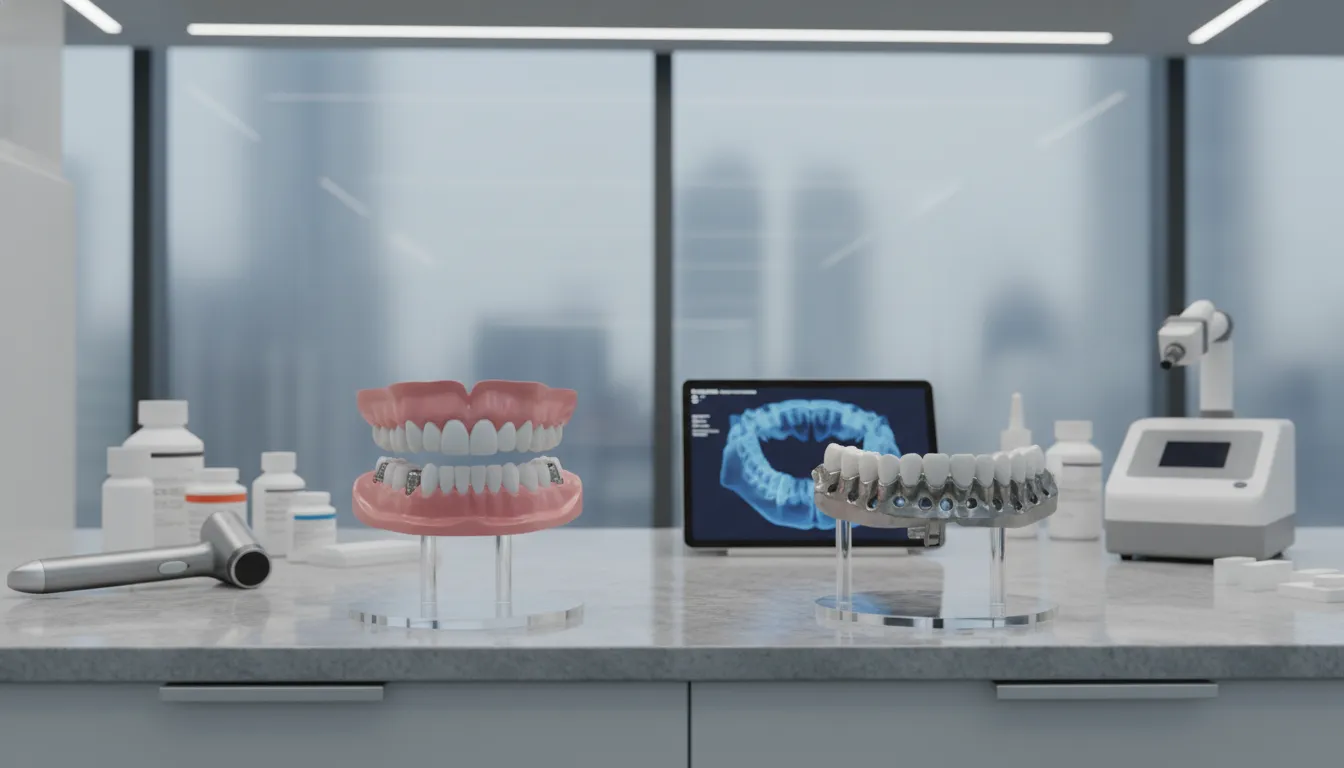
Both options can improve function compared with a conventional removable denture, but they create different care demands. Research on mandibular single-implant overdentures found better patient satisfaction and oral health-related quality of life than conventional removable dentures. That clinical outcome evidence supports implant retention, but it does not make one design right for every case.
Fixed and removable designs
A removable overdenture gives the patient direct access to clean the prosthesis, attachments, and supporting tissues. Its attachments may need routine replacement or adjustment as they wear. Bar design, restorative space, and attachment choice also affect the planned removable implant overdenture workflow.
A fixed hybrid stays in place during daily use. The patient cleans beneath it with tools suited to the available tissue space and prosthesis contour. The clinician must plan access for hygiene, screw service, and professional removal. This design may suit patients who value a fixed feel but can maintain the required home-care routine.
Implant support and case selection
Implant count is not just a preference. It follows anatomy, implant distribution, restorative space, load, opposing dentition, and the chosen prosthetic design. A fixed full-arch hybrid often uses four to six implants. The final plan still depends on bone volume and whether added surgical steps are needed.
Removable designs can use fewer implants, while bar-retained plans may call for broader support and added restorative space. Fixed and removable options also differ in retention, repair paths, hygiene access, and long-term maintenance. Clinicians reviewing fixed or hybrid full-arch options should assess these factors together rather than rank either design in isolation.
This is why the comparison is a case-selection guide, not a patient-facing preference list. The practical question is not which option sounds better. It is which design fits the patient's anatomy, dexterity, hygiene capacity, treatment goals, and maintenance outlook.
How do overdentures and hybrid dentures compare in daily practice?
The main difference between implant overdentures and hybrid dentures is how the patient uses the prosthesis. An overdenture is removable, while a hybrid is fixed to implants and removed by the clinical team. This distinction shapes hygiene, maintenance, retention, and patient expectations from the first consultation.
The daily-practice comparison
Neither option is the default choice for every edentulous patient. The right plan depends on anatomy, dexterity, hygiene habits, restorative space, implant position, and the patient's priorities. The table compares the issues that tend to affect daily care and long-term follow-up.
| Clinical factor | Implant overdenture | Hybrid denture |
|---|---|---|
| Design and support | Patient-removable prosthesis retained by implants and attachments; the ridge may also share support. | Fixed full-arch prosthesis secured to implants; the clinical team removes it when needed. |
| Hygiene and daily routine | Removed for direct cleaning of the prosthesis, attachments, and tissues. | Cleaned in place, including beneath the prosthesis; requires suitable tools and patient skill. |
| Retention and expectations | Improves stability while preserving a removable routine; attachment wear can change retention. | Provides a fixed experience; patients must understand that professional removal may be needed. |
| Materials and durability | Material choice must account for attachment housings, wear, repair access, and available restorative space. | Material and framework choices must manage full-arch forces, access channels, repair needs, and restorative space. |
| Maintenance pattern | Follow-up often centers on attachment inserts, housings, fit, tissue health, and prosthesis wear. | Follow-up often centers on screws, access channels, hygiene below the prosthesis, framework, and restorative wear. |
| Chair time and common case fit | Often fits patients who value easier home cleaning, removable care, and improved denture stability. | Often fits patients seeking a fixed full-arch option with enough support and manageable hygiene access. |
Hygiene and maintenance demands
Home-care ability should guide the choice before the team discusses a fixed or removable preference. A removable design gives direct access to tissues and components. A fixed design asks the patient to clean around implants and under the prosthesis each day.
Maintenance differs, but neither design is maintenance-free. Research on mandibular overdentures describes prosthetic complications and attachment maintenance as part of follow-up care. Fixed hybrids also need planned checks for hygiene, restorative wear, and screw-related concerns.
Case fit and patient expectations
Implant overdentures can suit patients who want more stability but can manage removal and insertion. The discussion should cover the feel of added retention and the need for ongoing attachment care. Clinicians can review removable implant overdenture workflows when planning retention and maintenance.
Hybrids may suit patients who strongly prefer a fixed prosthesis and can maintain access beneath it. The team must also assess implant support, restorative space, tissue display, and repair access. AvaDent's guide to fixed or hybrid full-arch options outlines related planning points.
Case-selection factors that should drive the recommendation
Use a repeatable sequence before presenting either option:
- Confirm surgical feasibility, implant distribution, and prosthetic space.
- Evaluate hygiene ability, dexterity, recall reliability, and attachment maintenance tolerance.
- Match retention expectations to the patient's willingness to accept removable or fixed care responsibilities.
- Review material risk, parafunction, repair pathways, and long-term service planning.
- Document the recommendation in language the patient can repeat accurately.
Case selection starts with the clinical limits, not the patient's preference for fixed or removable teeth. Compare anatomy, restorative space, hygiene ability, and expected load before discussing either design. Then explain how each factor changes treatment, maintenance, and long-term risk.
Anatomy and restorative space
Review bone volume and quality, ridge form, smile line, lip support, and the opposing arch. Implant number, position, and spread must support the planned prosthesis without forcing a poor restorative contour. Limited bone may also change the need for grafting or the feasible implant distribution.
Interarch space deserves its own check because attachments, bars, frameworks, teeth, and acrylic each need room. Parafunction and a strong opposing dentition raise load concerns, so assess framework support and likely wear. Use the diagnostic setup to test esthetics, phonetics, access, and prosthetic thickness before committing.
Hygiene ability and maintenance
The fixed-versus-removable choice often turns on what the patient can clean each day. A removable overdenture gives direct access to the prosthesis and attachments. A fixed hybrid requires the patient to clean beneath the prosthesis and around each implant.
Consider vision, hand dexterity, motivation, caregiver support, and past hygiene habits. If a patient cannot manage the planned routine, the fixed label offers little clinical value. Maintenance matters for both choices; research on mandibular overdentures documents prosthetic complications related to attachment types. Set a recall plan that matches the patient's risk and ability.
Expectations, budget, and risk
Ask what the patient means by fixed. Some want confidence during speech and meals, while others mainly want to avoid removing a prosthesis. Clarify esthetic goals, feel, cleaning duties, repair expectations, and tolerance for future maintenance.
Budget sensitivity should shape the discussion without reducing it to the initial fee. Compare surgical scope, restorative complexity, maintenance, and likely repair pathways for fixed or hybrid full-arch options and removable implant overdenture workflows. Do not promise that one design will always cost less over time.
Frame the recommendation as a risk-benefit match:
- Recommend removable when hygiene access, lip support, limited anatomy, or simpler repair access outweigh the wish for a fixed prosthesis.
- Recommend fixed when implant support, restorative space, hygiene capacity, and patient expectations align with the added restorative demands.
- Pause and reassess when parafunction, poor compliance, uncertain expectations, or unfavorable implant distribution creates risk that neither design can solve.
Document why the selected design fits the case, plus the tradeoffs discussed and maintenance plan. For implant overdentures vs hybrid dentures, the sound recommendation is the one the patient can support, clean, and maintain.
What changes for hygiene, maintenance, and follow-up?
Daily cleaning access
In the implant overdentures vs hybrid dentures decision, hygiene access is a practical difference. Patients can remove an overdenture to clean its tissue surface, attachments, and the implant sites. This access may suit patients who can remove, handle, and reseat the prosthesis as directed.
A fixed hybrid stays in place during home care. Patients need clear instruction on cleaning beneath the prosthesis and around each implant site. The care team should confirm that the patient can use the recommended aids before selecting a fixed design.
Different maintenance points
Removable designs shift part of routine care toward the attachment system. Inserts, clips, or other retentive parts may wear and need replacement as retention changes. The clinician should also check the fit, supporting tissues, prosthesis surface, and the patient's cleaning method. Research on two-implant overdentures describes maintenance and complications across attachment types.
Fixed hybrids have a different service path. Professional access may be needed to inspect components, address a repair, or clean areas the patient cannot reach well. The design should let the clinical team maintain the prosthesis without making daily home care harder than needed.
- For removable cases, monitor retention, attachment wear, tissue response, and how well the patient reseats the prosthesis.
- For fixed cases, monitor implant-site hygiene, access below the prosthesis, component condition, and the patient's use of home-care aids.
- For either design, review comfort, function, plaque control, and any change that could call for earlier care.
A follow-up plan matched to the patient
Follow-up should reflect the prosthesis, implant sites, dexterity, health history, and plaque control. Instead of using one schedule for every patient, set recall timing from observed needs and adjust it when findings change. Document who will provide professional maintenance and what will trigger an added visit.
Treatment planning should also account for long-term service access. AvaDent's guide to removable implant overdenture workflows can support discussion of bar-based options. Its overview of fixed or hybrid full-arch options adds context for fixed care. The right hygiene plan is one the patient and care team can follow over time.
Material durability and prosthetic design considerations
When comparing implant overdentures vs hybrid dentures, material choice cannot be separated from prosthetic design or planned maintenance. Both options must manage chewing forces while supporting repair, hygiene, and long-term follow-up. The right design depends on implant position, available restorative space, opposing dentition, and the patient's ability to clean the prosthesis.
Monolithic PMMA and common failure points
A monolithic digital denture is milled as one connected structure rather than assembled from separate denture teeth and a base. This design removes the bonded tooth-to-base interface, which is a common point of concern in conventional designs. AvaDent's XCL material is designed to resist tooth pop-offs and provide a durable full-arch prosthesis.
Pre-shrunk, porosity-free PMMA also supports a smooth, consistent prosthetic surface. Its low porosity can help limit areas where stains and bacteria collect, although daily cleaning and clinical maintenance remain necessary. These features may suit removable and fixed designs, but they do not replace sound case planning.
Titanium reinforcement and force management
Titanium reinforcement may be useful when the design must manage forces across a full arch. In AvaMax-style hybrids and overdentures, a titanium basket can support the PMMA structure and help disperse force. Clinicians reviewing AvaMax implant-supported denture workflows should assess framework fit, prosthetic space, implant spread, and occlusion together.
A fixed hybrid can use titanium and PMMA to create a screw-retained prosthesis that stays in place between professional visits. A removable overdenture may also use a reinforced framework, but its attachment system and patient removal pattern change how forces reach implants and tissues. Material strength alone cannot correct poor support, limited clearance, or an unbalanced bite.
Durability includes serviceability
Durability is not just resistance to fracture. It also includes how easily the clinical team can inspect, clean, adjust, or repair the prosthesis. A systematic review of two-implant overdentures documents prosthetic complications and maintenance linked to different attachment types.
For removable designs, teams should plan for attachment wear, retention changes, and routine hygiene access. For fixed hybrids, they should plan for screw access, professional cleaning, and inspection beneath the prosthesis. Reviewing fixed or hybrid full-arch options alongside removable choices helps connect material selection with the expected service plan.
Comparing cases that could go removable or fixed? Connect with AvaDent before finalizing the prosthetic design so material, retention, and service expectations align with the clinical plan.
Where digital workflows improve predictability
Digital workflows can make treatment planning more consistent for both implant overdentures and hybrid dentures. They do not replace clinical judgment. Instead, they keep records, design choices, and production steps connected from the first visit through delivery and later replacement.
Connected records and design review
Complete digital records give the care team a shared reference for tooth position, bite, contours, and implant relationships. A digital preview lets the clinician and patient review the proposed setup before the final prosthesis is made. This step can catch design questions earlier, when changes are easier to discuss and manage.
Patient goals still matter in this process. Research on mandibular implant overdentures found better patient-reported satisfaction and oral health-related quality of life than conventional removable dentures. That evidence does not choose a prosthesis for the clinician. It shows why function and patient experience should guide the digital plan.
Repeatable monolithic fabrication
After design approval, milling a monolithic prosthesis from one block can reduce separate parts in the final form. The approved design file guides fabrication instead of relying on disconnected handoffs. This process can support a consistent result, while the outcome still depends on sound records and case selection. AvaDent's AvaMax implant-supported denture workflows show how digital planning fits into full-arch care.
Defined visits and future replacement
A short, staged appointment protocol gives each visit a clear purpose. Records, preview, clinical review, delivery, and follow-up each have a place. Turnaround expectations should also be set before treatment starts. Complex cases may need added time when records change, implants need review, or the planned design needs revision. Clear checkpoints help protect chair-time efficiency without rushing clinical decisions.
The stored digital file remains useful after delivery. If a prosthesis is lost, damaged, or worn, the file gives the team a known starting point for replacement. The mouth and implants must still be checked because anatomy and clinical needs can change. This continuity matters when comparing removable implant overdenture workflows with fixed hybrid plans, since maintenance and access needs differ.
How should clinicians manage patient expectations?
When discussing implant overdentures vs hybrid dentures, start with how each option will feel and what the patient must do each day. An overdenture remains removable, while a hybrid stays fixed between clinical maintenance visits. That distinction should guide the rest of the consent talk.
The daily experience
Use a model to show how the patient removes, seats, and cleans an overdenture. For a hybrid, show how to clean beneath the prosthesis and around each implant. Reviewing fixed or hybrid full-arch options can help the care team use the same terms before treatment.
Explain that neither option will feel natural on day one. Set a clear adaptation period, then invite the patient to report sore areas, bite concerns, speech changes, or cleaning barriers. Ask the patient to repeat the home-care plan in their own words before leaving.
Hygiene and recall responsibilities
Make responsibility clear before treatment begins. Overdenture patients must remove and clean the prosthesis as instructed, while hybrid patients need reliable access beneath the fixed restoration. Show the tools and technique, then confirm that dexterity, vision, and caregiver support match the plan.
Recall is part of treatment, not an optional extra. Published research on overdenture attachment maintenance describes prosthetic complications tied to different attachment types. At each visit, assess tissue health, hygiene access, attachment retention, screws, wear, and the patient's ability to follow the home-care plan.
Cost, adaptation, and future care
Frame cost as a long-term care choice rather than an initial fee alone. Compare the expected home-care burden, planned recall, possible repairs, and likely replacement needs for each path. A review of removable implant overdenture workflows can support a more specific discussion of treatment scope and value.
Discuss repair and replacement before delivery. Patients should know who to call if an attachment loosens, the prosthesis fractures, or cleaning becomes hard. Explain which issues may need an office visit and which may require lab work. Record the agreed recall plan and revisit expectations as health, dexterity, and support needs change.
FAQPage schema.
Frequently Asked Questions
How much does a four-implant overdenture cost?
Pricing varies by arch, implant system, surgical complexity, imaging, materials, and local fees. As a reference, removable overdentures supported by two implants generally cost $6,000 to $10,000, according to AvaDent's implant bar overdenture guide. A four-implant plan may cost more, so clinicians should prepare a case-specific estimate after diagnostic review.
Can people with autoimmune disease get dental implants?
Many patients with autoimmune disease can receive dental implants, but candidacy requires an individual medical and dental assessment. AvaDent's implant-supported denture guide notes that many such patients receive implants without complications. Clinicians should review disease control, medications, healing capacity, oral hygiene, and coordination needs with the patient's physician before planning treatment.
How many implants do you need for a hybrid denture?
A fixed full-arch hybrid denture commonly uses four to six implants, although the final number depends on the individual case. AvaDent's full-arch hybrid guide describes this common range. Bone volume, implant distribution, restorative space, opposing dentition, and load requirements should guide planning. Some patients may require grafting or a sinus lift before implant placement.
Are hybrid dentures easier for patients to clean than overdentures?
Usually, removable implant overdentures are easier for patients to clean because they can remove the prosthesis at home. Fixed hybrid dentures remain attached and require cleaning beneath the prosthesis with appropriate brushes, floss, or irrigation tools. The better option depends on dexterity, hygiene habits, tissue access, and the patient's ability to follow a long-term maintenance plan.
How do maintenance needs differ between implant overdentures and hybrid dentures?
Implant overdentures often require replacement or adjustment of attachment components as they wear. Fixed hybrid dentures need professional removal when indicated and monitoring of screws, prosthetic materials, and hygiene access. Research on different mandibular overdenture attachments confirms that attachment choice affects prosthetic complications and maintenance. Both designs require scheduled recalls, implant assessment, and professional cleaning.
Ready to plan your next full-arch workflow?
Delaying the prosthetic decision can leave your team without a clear path for case planning, patient communication, and restorative coordination. Starting the discussion now gives clinicians time to compare removable and fixed workflows before treatment milestones begin to limit practical options. Early planning also helps align the chosen approach with clinical priorities, maintenance expectations, and the workflow your practice can support.
Ready to define a practical path for your next full-arch case? Bring your case goals and workflow questions so the conversation can focus on the choices that matter to your team and patient. Call 480-275-7144 or contact AvaDent online to contact AvaDent and discuss digital overdenture and hybrid prosthetic workflows with a team focused on clinician needs.