




Restoring the proper vertical dimension is a vital technical step for getting steady digital denture outcomes. Clinicians who master this record can save chair time and keep patients happy.
Interested in upgrading your clinical precision? Get started with AvaDent today or contact our clinical team to learn how our digital solutions can benefit your practice.
Occlusal vertical dimension dentures are clinical measurements that show the face height when the upper and lower teeth meet. Setting this record requires a careful balance between the physical height of the face and the rest position of the jaw. This clinical record sets the space between the arches when the teeth are in full contact. If the height is too high, patients may feel muscle pain and clicking sounds when they speak. If the height is too low, it can lead to sores at the corners of the mouth and a sunken look. According to clinical research, a correct vertical dimension is key to avoid joint damage. This record ensures the denture works well for the patient (PMC11161034). Modern digital tools help you transfer these records with high precision to build teeth that fit better and last longer.
Clinicians often find it hard to pick the best way to record these facts during the first visit. Knowing the basic rules of jaw height helps you avoid common mistakes that lead to costly remakes. To improve your results, you must first define What is the Vertical Dimension of Occlusion in Dentures? The first step is to define...
Occlusal Vertical Dimension Dentures: What is the Vertical Dimension of Occlusion in Dentures?
Occlusal vertical dimension (OVD) is a key part of making good dentures. It is the height of the lower face when the upper and lower teeth meet in a full bite. Clinicians often use this size of the lower face to plan how a new set of teeth will fit. Getting this height right helps the dentures work well and feel right. It is a main step in the custom denture fabrication steps that every lab must follow. Without this exact height, the new teeth may cause pain or fail to work for the patient.
The difference between VDO and VDR
While VDO tracks the face height during a bite, vertical dimension at rest (VDR) is different. VDR is the length of the face when the jaw is in a natural rest position. At rest, the teeth do not touch. This rest state is not just one spot. It is more of a range of posture where the jaw muscles are mostly at ease. In this state, the lips should meet softly without force. Finding this rest point is the first step in finding the right OVD for the patient.
The space between the teeth in this rest state is the interocclusal rest space. Many call this the freeway space. This small gap is vital for the health of the mouth and the comfort of the patient. In most people, this gap is about two to four millimeters. It gives the mouth a place to rest so the teeth do not constantly hit each other. If a set of teeth is too tall, this space goes away. This can put too much stress on the jaw and the gums.
The role of the interocclusal rest space
The rest space helps the jaw muscles stay relaxed during the day. If a denture is too tall, it can take away this rest space and cause the teeth to click. This often leads to joint and muscle pain for the patient. It can also make it hard for them to swallow or speak clearly. In the CAD/CAM denture fabrication process, digital tools help keep this space exact. This ensures the teeth do not hit each other when the person is just resting their jaw or talking. These tools help match the teeth to the natural way the jaw moves.
Why proper OVD matters for patient success
Correct OVD is the base for how a patient looks and feels. If the OVD is too low, the face can look collapsed or aged. This might cause sores at the corners of the mouth or jaw joint issues. On the other hand, an OVD that is too high can make the face look stretched out. It can even cause bone loss in the jaw over time due to extra force. This force can also make the gums sore and the teeth feel sensitive.
Using digital denture design and occlusion tools helps find the best height for each case. These tools allow for small changes to the bite before the final teeth are made. This helps avoid the need for many changes later. It also helps the patient get used to their new teeth faster. A steady and right OVD leads to better results and more happy patients. It is the core of a denture that stays in place and lasts a long time.
Clinical Evaluation: Methods of Measuring VDO and VDR
Getting the occlusal vertical dimension right is a vital step for any clinical denture work. This record sets the height of the lower face when the teeth or rims meet in maximum contact. Restoring this space helps with patient comfort and avoids joint pain during chewing or speech. You must check these levels often during the custom denture fabrication steps to get the best result.
Speech and rest tests
Doctors often use speech and rest to find the right face height for a new patient. You can ask them to say "S" sounds to check the closest speaking space between the teeth. This helps find the spot where the upper and lower teeth nearly touch when they talk. If you set the bite too high, the patient may have muscle pain or trouble eating and speaking.
Facial and bone records
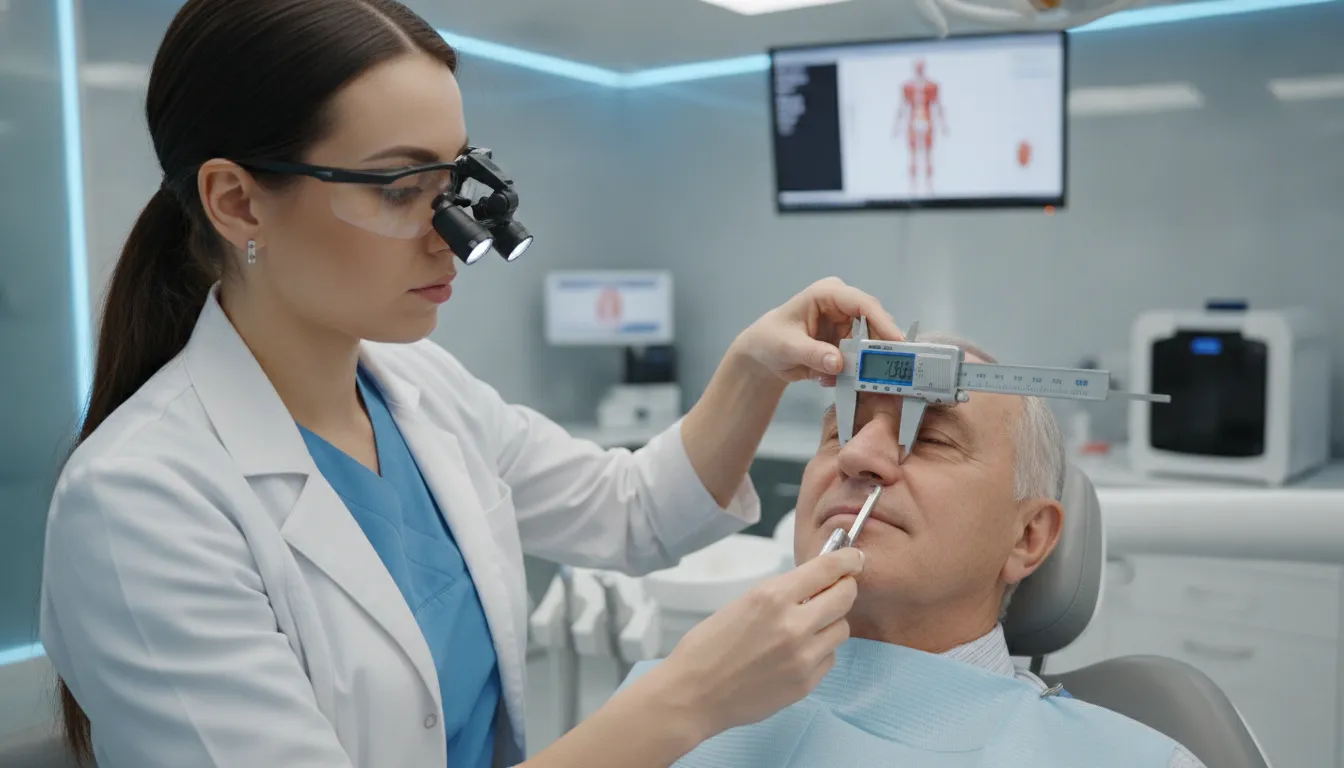
Facial tools like the Willis guide help find the space between face points like the nose and chin. Some pros use the swallow reflex or old photos to see where the jaw naturally sits. There is no single best way to find this height for occlusal vertical dimension dentures. Some studies list as many as ten different ways to check these levels.
Saving the bite data
Once you find the height, you must save the data with a bite record for the lab. In a digital workflow, this data goes into the design software to build the teeth with high precision. You should check the height at each clinic visit to ensure a steady fit. Following AvaMax clinical record procedures can help make the process more clear for complex cases.
- Start by finding the rest position of the jaw. Mark points on the nose and chin to check the rest height.
- Ask the patient to speak and swallow to check for comfort. Use speech tests like "S" and "M" sounds to see the tooth gap.
- Compare the rest height to the bite height. The bite height should leave a small space between the teeth when the jaw is at rest.
- Use old dentures or wax rims to test the new height. Look at the face from the side to check for a natural look.
- Save the final height with a bite record paste. Check the record one last time before you send the data to the lab.
Clinical Consequences: Managing Over-Opened and Under-Opened Occlusal Vertical Dimension Dentures
Setting the right occlusal vertical dimension in dentures is a vital step for patient success. If the record is wrong, it can cause the prosthetic rehabilitation to fail. Clinicians must find the best height for the lower face to avoid pain and functional loss.
Effects of an over opened dimension
An increased vertical dimension often leads to muscle and joint pain. Patients may find it hard to swallow or chew their food correctly. This tension can also cause teeth to clack together during speech. Long term, it may lead to bone loss and tooth sensitivity from high forces.
You may also see a long look in the lower face. This facial fatigue often makes it hard for patients to wear their dentures all day. Using a digital denture design and occlusion workflow helps to prevent these issues by setting precise limits.
Risks of a decreased dimension
An under opened dimension can cause facial disharmony and skin issues like angular cheilitis. It often puts too much stress on the jaw joint. This stress can lead to joint disorders over time. Patients may also struggle with cheek biting because they lack enough vertical space.
When the vertical dimension is too low, the face may look collapsed. This change affects both how the patient looks and how they feel. Following the AvaMax clinical record procedures helps to ensure the record stays stable and accurate.
Comparison of clinical symptoms.
| Clinical Symptom | Over-Opened (Increased) | Under-Opened (Decreased) |
|---|---|---|
| Facial Appearance. | Strained or long look. | Collapsed or aged look. |
| Pain and Comfort. | Muscle and joint fatigue. | Jaw stress and soreness. |
| Speech and Sound. | Teeth clacking or clicking. | Lisping or muffled speech. |
| Soft Tissue Health. | Bone loss risk. | Skin sores and cheek biting. |
| Functionality. | Swallow and chew trouble. | Low bite force and instability. |
Accurate records are key to avoiding these clinical risks. Without a clear path to find the vertical dimension, restorations may cause discomfort and functional loss for the patient. Modern digital tools can now help clinicians hit the target more often with less chair time.
Transferring the VDO Record into a Digital Denture Workflow
In the past, moving a patient's bite record to a lab was a risk. Hand-made stone models can break or wear down. Wax rims can also shift during shipping or handling. These small changes often lead to a poor fit. In a high-tech workflow, the occlusal vertical dimension in dentures is saved as digital data. This keeps the record safe and exact from the clinic to the lab. Dentists can feel sure that the final denture will match their original plan.
This path uses scans instead of heavy casts. It removes many of the manual steps that cause errors. By using a cloud-based system, labs receive the records in seconds. This speed helps the team start work right away. It also keeps the patient's records on file for a long time. This is a key part of custom denture fabrication steps that aim for high quality.
Digital precision in bite registration
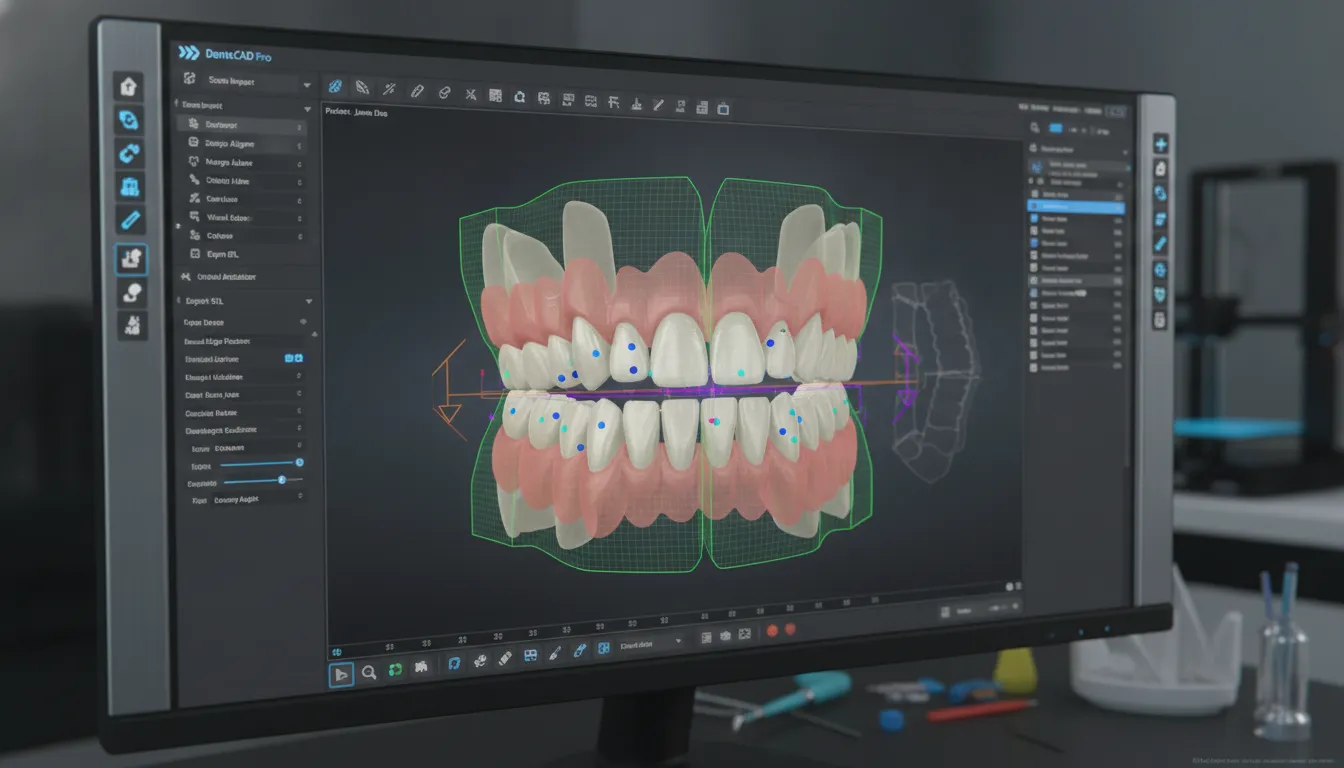
The first step in a smooth transfer is linking the OVD record with the bite registration. AvaDent uses a system where the chairside data goes straight into the design tool. Digital impressions for dentures help ensure that every detail is captured. This tool gives a much clearer view of how the jaws meet than old wax rim methods can provide. It shows the doctor exactly where the teeth should sit for the best fit.
By using these tools, you can avoid the mess of old putty. The software takes the bite record and sets it in a 3D view. This helps keep the right face height for each person. It also reduces the number of visits a patient needs to make. A faster path helps both the dental office and the patient save time and money. Doctors can spend more time on care and less time on lab work.
Integrating OVD with CAD software
Once the data is in the system, CAD software gives the lab team full control. Designers can see the bite plane and vertical height with great detail on a screen. This software allows for digital denture design and occlusion settings to be adjusted with ease. Every change is tracked to ensure a perfect match to the doctor's chairside work. The software can even spot small errors before the denture is made.
Precision is vital when setting the vertical height of a new smile. High-tech tools help prevent errors that can cause sore spots or jaw pain. A dentist can review the digital design before the final product is milled. This check helps confirm that the teeth will look natural and work well. It ensures the patient has enough room to speak and eat without trouble. Proper planning helps avoid common issues like teeth clacking or cheek biting.
Benefits of monolithic digital dentures
AvaDent's monolithic dentures are milled from a single block of strong material. This unique design removes the risk of teeth popping out of the base. It also keeps the OVD stable because the parts cannot shift or move. Using a neuromuscular approach ensures the dentures feel natural for the patient. The result is a denture that is both tough and easy to wear.
Choosing a monolithic design offers several key benefits for the dentist and the patient:
- High-grade materials resist stains and germs better than old types of dentures.
- The stable OVD reduces the need for many post-fit adjustments.
- A digital file allows for an exact copy to be made if the first one is lost.
- The record stays on file for many years to help with future care needs.
Modern workflows make it easy to give patients a lasting, healthy smile. The digital transfer of the OVD is the base of this success. By removing manual errors, labs can produce a more steady fit every time.
Chairside Checklist and Clinical Documentation Best Practices
Finding the right occlusal vertical dimension in dentures is a key step for patient care. It is the height of the lower face when the teeth meet. Doctors must set this height early in the plan. A wrong fix can lead to many failures in prosthetic work. Good vertical height helps the patient look their best and stay easy. It also protects the jaw joint from long term harm and keeps the bite stable.
Essential chairside checks
You can use several tests to find the best face height for your patient. Sound tests are a great way to see if there is enough space. Ask the patient to say "s" sounds to check the gap between the teeth. You should also check the face when the jaw is at rest. This rest spot is often a range of posture rather than one fixed point. Re-verify the measure of facial height at every step to stay on track.
- Check sound clearance with "s" and "ch" sounds to make sure teeth do not hit.
- Measure the face at rest to find the needed freeway space.
- Look at lip support and how the face looks from the side.
- Make sure the patient can swallow without any strain.
- Check the new height against the old dentures the patient has now.
Look for signs that the height may be off during your check. A face that looks too long or tired can mean the height is too high. If the height is too low, the face may look out of balance. These small clues help you fine tune the record before you send it to the lab. Using more than one test helps you get a result that works for the patient's whole mouth.
Accurate clinical records
Clear records are the link between your office and the lab. Write down every tool and path you took to find the height. This helps the lab team follow your lead. In a CAD/CAM denture fabrication plan, these notes tell the maker where to set the bite. Note any pain in the muscles or teeth that might change how the patient holds their jaw.
Digital tools give you great power over the vertical height. Software uses your notes to build a bite that stays stable. If the records are wrong, it can lead to pain or poor chewing. Keep your notes simple and direct so they are easy for the design team to read. Clear data helps the lab use digital denture design and occlusion tools with full power.
Best practices for complex cases
Implant and hybrid cases need extra care to get a good fit. These patients have unique needs for how their teeth meet and stay strong. You must follow the AvaMax clinical record procedures for these jobs. These steps help you catch the exact link between the top and bottom jaws. Good records help make sure the final piece fits well and lasts a long time.
Always take a few extra minutes to double check your work. Ask the patient how their jaw feels and look for any odd muscle tension. Using a mix of tech and your own eyes leads to the best result. Precise records mean fewer changes later and a better life for the person in your chair. These habits build trust and help your practice grow through happy patients.
Ready to experience the precision of monolithic design and predictable occlusion? Schedule a clinical consultation with AvaDent today and elevate your complete denture success rates.
Frequently Asked Questions
Can the occlusal vertical dimension be changed after a denture is made?
Changing the occlusal vertical height on a finished denture is hard, so small changes often come from grinding the teeth. However, this can hurt the bite, and large height changes often need a full remake of the device. You should use digital denture design to set the height on a screen before the lab makes the final product. This helps you find errors early and prevents the need for costly resets during the clinical trial phase.
How much interocclusal rest space is needed for a successful denture?
Most dentures need about 2 to 4 millimeters of space between the teeth when the jaw is at rest, which is known as freeway space. This gap lets the jaw muscles relax, but without it, a patient may feel muscle pain or have trouble with clear speech. A study on vertical height theory shows that failing to set this space can cause the teeth to clack. It can also cause the jaw bone to wear away faster over time.
Can an incorrect vertical dimension cause jaw joint pain?
Setting the vertical height too high or too low can cause pain in the jaw joint, which is known as the TMJ. If the height is too high, the muscles stay tense and put too much stress on the joint during daily use. If the height is too low, the bite can become weak and lead to an uneven facial look. Research on PubMed shows that these errors lead to face pain and headaches for the patient.
How does digital design improve vertical dimension accuracy in dentures?
Digital software lets labs change the denture height on a screen with great care, and these tools give control down to a very small level. This is much more exact than using hand-made stone models that may have small errors from the lab process. Using digital scans also helps you record the bite without the errors of old tray methods. The software can check the fit in 3D to ensure the height is right for every patient.
Ready to master vertical dimension in your digital workflow?
Poor clinical records for face height lead to joint pain and failed dentures. These errors often cost your practice both time and money in the long run. You can avoid these costly risks by moving to a proven 3-appointment digital system today. This helps you save many hours of chair time each and every week. Starting right now means you get precise fits and better records from the very first visit. You will see better clinical results, happier patients, and better outcomes within just a few weeks of use.
Ready to schedule your session? Call (480) 275-2736 to schedule a digital denture integration discovery call and talk to a dental expert about CAD/CAM denture fabrication.