




Recurring denture sore spots disrupt practice workflows and frustrate patients and dentists. Successful care depends on distinguishing localized pressure trauma from occlusal instability, candidiasis, or another condition that needs further evaluation. This clinical guide offers a repeatable assessment and adjustment path, plus digital prevention strategies.
Explore the AvaDent digital workflow for a more precise fit and fewer repeat adjustment visits.
Denture sore spots are localized painful or inflamed tissue areas commonly associated with excessive border extension, uneven base pressure, or occlusal instability. Dentists should map the lesion, verify fit and occlusion, relieve only confirmed pressure areas, polish adjusted surfaces, and reassess healing. Persistent, diffuse, or atypical lesions require further evaluation rather than repeated base reduction.
Finding the source of patient pain is the first step toward a successful treatment plan. The next step is to examine what denture sore spots reveal during diagnosis and use those findings to choose a conservative, clinically appropriate response.
What denture sore spots reveal during diagnosis
When you find denture sore spots, they act as clear signs of stress. These red areas or small sores show where the prosthetic is not in balance with the soft tissue. A quick look at the spot can help you find the root cause. It might be a simple fit issue or a more complex problem with how the teeth meet. Finding the exact cause is the best way to save chair time and help your patients.
Where the tissue is hurt
The site of a sore spot often points right to the problem area. For example, pain on the ridge may come from a high spot in the bite. If the pain is in the fold of the cheek, the edge of the base may be too long. You should also check the timing of the pain. New dentures often cause minor spots as the mouth learns to adapt. These small sores should start to heal within a few days once you remove the pressure.
But if the pain lasts more than five days, it shows a poor fit that needs work. Long-term spots on the ridge may mean the tissue has changed. In these cases, a Digital Workflow Protocol helps you decide if you need a simple fix or a full reline. Some patients with ridge pain that does not go away may even need soft denture liners to help with the stress.
Identifying bite and fit issues
Sharp parts of the teeth or an uneven bite often cause sores in the mouth. This traumatic occlusion puts too much stress on specific parts of the gums. You may see swelling or redness right where the teeth hit too hard. These sores are common to see during a regular dental checkup.
Using Adaptive Occlusion Technology can help prevent these issues before they start. This AI software helps build a bite that needs very few changes once in the mouth. When the bite is balanced, the pressure stays even across the whole ridge. This stops stress in one spot and lowers the risk of hurt to the soft tissue. Dentists using this tool report up to 98% fewer adjustment visits.
Distinguishing swelling from fungal infection
Not all sore spots come from a bad fit. Some are due to bacteria or fungi. Denture stomatitis is a common issue that causes red, swollen tissue. It often happens when dentures are not kept clean or when they fit poorly. This condition is seen in many people who wear removable dentures. Global rates of this disease range from 20% to 67% of wearers.
You must check for fungal growth, like Candida species, when you see wide areas of red tissue. This is a big risk for older patients with other health issues. Milled dentures made from monolithic XCL material help by stopping bacteria from growing inside the material. This keeps the gums healthier and reduces the risk of swelling. Checking for cracks or rough spots on the denture surface is also a key step in clinical care.
A practical assessment table for common pressure patterns
The location and appearance of a sore spot can narrow the differential diagnosis. Vestibular pain may indicate excessive border extension, generalized ridge pain may suggest occlusal or base-fit problems, and diffuse palatal redness may warrant evaluation for denture stomatitis. Use the pattern as a screening clue, then confirm it with a complete clinical examination.
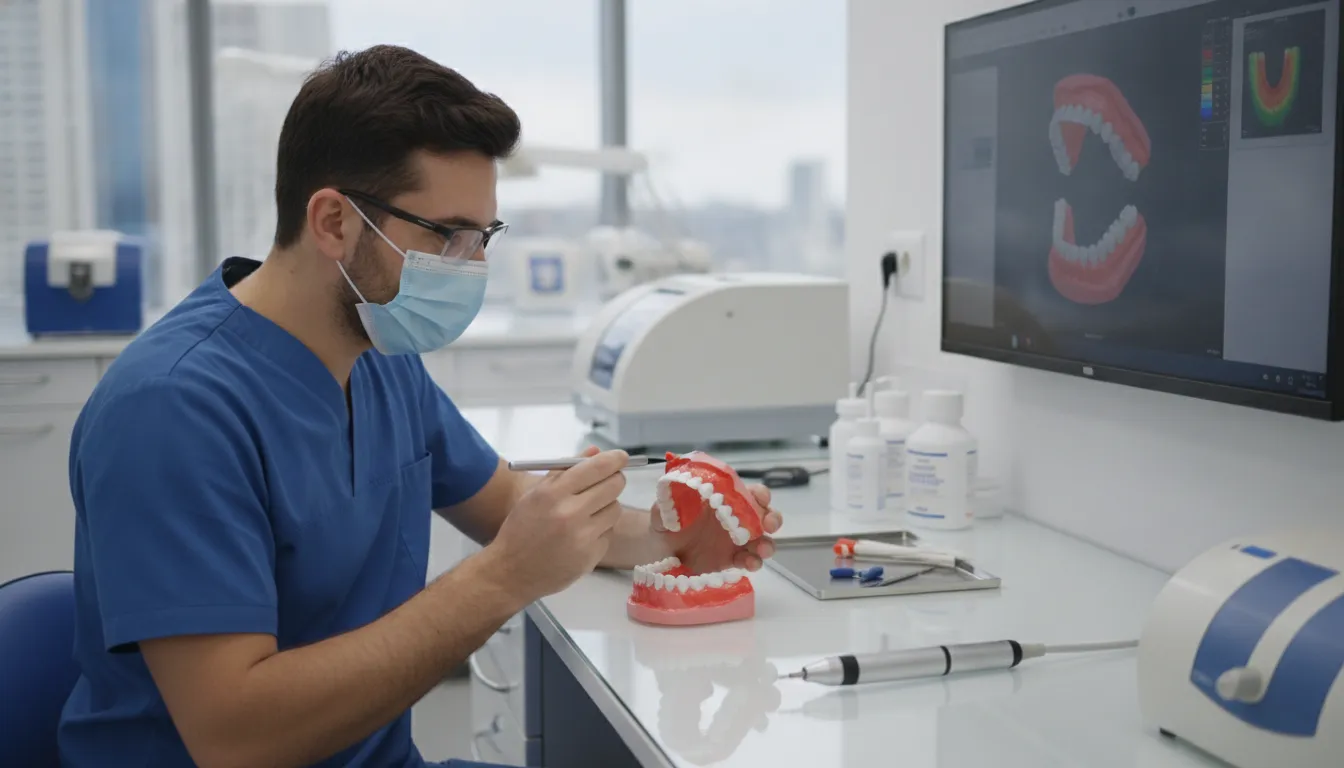
Finding the root cause of pain is key when managing fit issues and sore spots. Most patients will have some minor pain when they first get a new set of teeth. However, pain that stays for more than a few days needs a closer look. Research shows that denture stomatitis affects between 20% and 67% of people who wear dentures. This issue is often linked to a poor fit or a fungal growth like Candida. With over 15 years of clinical work, we know a set plan helps. It allows you to find the source of the trouble and fix it fast.
Real sores and tissue trauma
Real sores on the oral tissue often come from constant trauma or a bad bite. These lesions can occur because of sharp occlusal anatomy or rough spots on the base. When a patient feels a sharp pinch, it often means a border is too long. A muscle pull can also cause friction on the tissue. You should look for red zones or white patches that match the shape of the denture edge. If the pain is more spread out, it might be due to a bite that is too high. A high bite puts too much pressure on the bone and gums. This leads to sore spots that move around the mouth and cause stress for the patient.
Clinical findings and patterns
A good check-up starts with hearing the patient. They can often point to the exact spot where the pain is worst. You can then map these findings to likely causes. The table below gives a simple way to screen for common issues. These patterns guide your tests and help you decide if you need to trim the base or adjust the bite. They do not replace a full clinical exam, but they can save you time in the chair.
| Clinical Pattern | Likely Factor | What to Check | Next Step |
|---|---|---|---|
| Pain in the vestibule | Long borders | Muscle movement | Reduce border length |
| General ridge pain | High bite height | Resting space | Lower the bite height |
| Pain on the front ridge | Heavy front contact | Front-to-back bite | Adjust back teeth |
| Diffuse palatal redness | Fungal growth | Tissue health | Give anti-fungal care |
| Frequent cheek biting | Back tooth place | Side cheek space | Reset back teeth |
| Loose lower denture | Poor base fit | Seal and suction | Consider a reline |
Saving chair time
The goal for most dentists is minimizing clinical denture adjustments. New digital tools help by making the first fit much more precise. For example, Adaptive Occlusion Technology uses AI to engineer a perfect bite. This tool can reduce the need for fixes by up to 98%. This saves time for you and your staff while helping the patient feel at ease from day one. When simple fixes do not work, you must know when to consider a denture reline. A reline can fix issues caused by changes in the jaw bone over time. Using a soft liner may also help patients who have chronic ridge pain. These steps ensure your patients stay happy with their dentures and trust your practice.
How should dentists adjust denture sore spots safely?
A safe denture adjustment is conservative and evidence-led. Identify the lesion, use pressure-indicating material to confirm the corresponding base area, evaluate occlusion before grinding, remove minimal material, and repolish the surface. Recheck comfort and stability, then arrange follow-up so persistent or atypical tissue changes are not mistaken for routine pressure trauma.
Dentists must follow a set plan when they fix sore spots. If you grind the base without a goal, you may lose the seal of the denture. This can make the fit worse and cause more pain. It is vital to find the true cause of the rub before you start any work. Most denture sore spots come from either a bad fit or a bad bite.
Find the pressure spots
Start by looking at the tissue in the mouth. You are looking for red zones, small sores, or swelling. These spots tell you where the pressure is too high. You can use a pressure-indicating paste to see where the denture base hits. Apply a thin layer of paste and seat the denture. The spots where the paste rubs off show you where to fix the base.
Physical sores in the mouth often come from traumatic bite forces or sharp teeth. If the denture moves during chewing, it will pinch the gums. You must know if the base is too long or if the bite is pushing it the wrong way. Finding the exact spot prevents you from taking away too much material.
Check the bite and fit
A bad bite is a common cause of pain. If the teeth do not hit evenly, the denture will tilt. This tilt puts pressure on one side of the ridge. Use thin marking paper to check the bite. Make sure the teeth meet in the right place without sliding. Fixing the bite first can often stop the pain without any need to grind the base.
Using digital tools helps in minimizing clinical denture adjustments. Precise milling makes the base fit the gums much better. If you must adjust the base, only remove a small amount of material at a time. This keeps the strength and fit of the denture high. You should also check for hygiene issues. Denture stomatitis is a common disease in denture wearers that can cause red, swollen gums.
Safe chairside workflow
- Check the mouth. Look for red marks or swelling to find where the pain is.
- Mark the denture. Use a paste to find the exact pressure points on the base.
- Verify the bite. Check the teeth to ensure they hit at the same time and do not slide.
- Relieve the pressure. Use a bur to remove a tiny bit of material only where the paste was rubbed off.
- Polish the area. Smooth the adjusted spot to prevent bacteria from growing in rough cracks.
- Educate the patient. Tell the patient to leave the denture out at night to let the gums rest.
- Follow up. See the patient in a few days to make sure the sore is healing well.
If a sore does not heal in three to five days, it may be more than just a pressure spot. You should check for other issues like a fungal infection. When the pain stays even after a few fixes, it is time to look at when to consider a denture reline.
When the sore spot is not the real problem
Finding the source of denture sore spots is a common problem. Often, a dentist sees a red area on the gums and thins the denture base to give relief. This may work for a simple fit issue. But if the pain stays or moves, the base might not be the real problem. The true cause is often how the teeth meet when the patient bites down.
A sore area is often a sign of a bad bite. If the teeth do not meet well, the denture can shift or tilt. This movement creates friction on the gums far from where the teeth touch. It is hard to find the source of the pain without looking at the whole fit. A stable denture needs more than just a good match to the gum tissue.
The impact of traumatic occlusion
When teeth do not align, it causes traumatic occlusion. This uneven pressure pushes the denture base into the soft tissue with too much force. Studies show that traumatic occlusion is a main cause of lesions in the mouth. Even a small high point can make the denture slide and rub the gums. This sliding is a frequent cause of chronic denture sore spots.
Checking how the teeth hit is a key step. If they do not hit at the same time, the denture will move. Simply grinding the spot where it hurts does not stop the shift. To fix the pain, the dentist must find the bite errors. Fixing these errors stops the movement and protects the gums from further harm.
Limits of localized relief
It is easy to keep thinning the denture base until the pain stops. But this has risks. Removing too much material makes the base thin and weak. This can lead to cracks or breaks. If the problem is about a stable fit, thinning the base will not help. The pain will come back when the patient eats. Dentists must find a balance between comfort and strength.
The dentist should also check the borders and retention. Borders that are too long will poke the tissue. If they are too short, the denture will not stay in place. Both issues lead to more sores. A stable base must stay still during talk and meals. Fixing the borders and the bite is better than just grinding the base.
Improving stable fit with digital care
New tools help dentists get a great fit on day one. Digital workflows use software to plan the bite with exact care. AvaDent uses tech to engineer the way teeth meet. This helps in minimizing clinical denture adjustments for the patient. By getting the bite right in the lab, there is less work in the chair.
Dentists who use these systems report far fewer visits for pain. Data shows that these methods can lead to a 98% drop in adjustment visits. This saves time and keeps patients happy. When the bite is stable, the denture does not slide. This lowers the risk of sore spots and ensures the patient is comfortable for a long time.
When does denture soreness require further evaluation?
Many patients expect some level of pain when they first get new dentures. These minor denture sore spots are often a short-term issue as the mouth gets used to the new teeth. But long-term pain can show a deeper problem that needs a professional check. Clinicians must be able to tell the difference between a simple adjustment and a more serious issue.
Signs of persistent tissue trauma
Sore spots should start to heal within a few days if the cause of the pressure is gone. If a sore lasts over five days, it needs a visit. Long-term soreness usually means that the denture does not fit well. This can lead to physical sores on the gums or the roof of the mouth.
These sores often come from constant trauma or sharp edges on the teeth. A poor bite can also cause painful spots on the inner oral tissues. According to the National Institutes of Health, physical sores are common findings during routine dental exams. Finding these issues early helps stop swelling and more severe tissue damage.
Clinicians should document the size and location of any sores they find. This record helps track healing over time. If the sore does not change after an adjustment, it may need more tests. Proactive care is the best way to prevent chronic tissue pain.
Identifying signs of denture stomatitis
Denture stomatitis is a very common issue for people with removable teeth. Research shows that it affects between 20% and 67% of denture wearers globally. This issue is often a fungal growth linked to poor hygiene or a bad fit. It causes swelling and redness in the areas under the denture.
Bacteria and fungi can grow in the tiny pores of old-style denture materials. This growth leads to rubbing and redness on the gums. Older patients with other health issues may face even higher risks for these infections. In some cases, a single sore spot is the first sign of this fungal growth. Clinicians should check for these signs at every visit.
Stomatitis often appears as a bright red area that matches the shape of the denture base. Patients might feel a burning sensation or a dry mouth. It is important to treat this early so it does not spread. Proper cleaning of the prosthetic every day is a key step.
Body health and material concerns
Some patients may have long-term ridge pain that does not go away with simple fixes. In these cases, a soft liner may help reduce pain and add comfort. It is also vital to look for signs of reactions to the material. Materials with pores can trap bacteria, which makes it hard to keep the mouth clean.
Using high-quality materials can help lower these risks. Monolithic XCL dentures are milled from a single block of PMMA with no pores. This design helps stop bacteria from getting in and keeps the tissue healthy. Advanced materials offer several benefits for oral health:
- They lack the pores found in traditional resins.
- They resist the buildup of harmful bacteria.
- They provide a more precise fit from the start.
When local sore spots do not go away, clinicians must decide when to consider a denture reline instead of just small changes. This proactive step helps the patient stay comfortable and the office run better.
Compare digital denture options before your next removable-prosthetics case.
How digital workflows can reduce repeat sore-spot visits
Digital workflows may reduce repeat sore-spot visits by preserving precise clinical records, limiting fabrication variability, and supporting a consistent base fit and occlusal design. When symptoms arise, the stored record also gives the clinical and laboratory teams a stable reference for troubleshooting. Relines, or replacement rather than starting from an entirely new impression.
Dealing with fit issues and sore spots is a major part of dental care. Old ways of making dentures use hand-made molds that can change shape as they dry or cool. This small shift in size can cause a poor fit. When the part does not fit well, it rubs the gums and leads to denture sore spots. Digital workflows solve this by using precise data to keep the fit the same from start to end.
A digital path helps the clinic work faster and with more care. Instead of a messy mold, a scan takes a perfect picture of the mouth. This file goes to a computer that guides a milling tool. The tool cuts the part from a single, strong block. This means there are no small errors that often happen when working by hand. This level of care helps stop the pain that comes from a part that does not sit right on the tissue.
Precision in the milling process
High-tech milling tools offer a level of detail that hand-work cannot match. When a dentist uses a digital scan, the computer tracks the exact shape of the gums. This data stays the same during the whole design phase. By using this path, clinics see fixing fit issues fall by nearly 98%. This saves time for the dentist and the patient.
A good fit is the best way to avoid hurt gums. Research shows that physical sores in the mouth often come from long-term rubbing or traumatic occlusion from a bad bite. A digital system checks the bite before the part is made. This means there are no high spots to press into the gums. The result is a part that feels better and causes less pain or swelling over time.
Stored records for fast problem solving
One big plus of a digital workflow is that it stores exact files for every patient. If a patient has a problem, the dentist can look at the original design file. This helps them find out if the issue is the fit or a change in the patient's mouth. Having this data makes it easy to find and fix problems. It helps avoid many extra office trips that take up time and money.
These saved files also allow for fast and easy remakes. If a part breaks or is lost, a new one can be made from the same file. A new, exact copy can be cut without needing a new mouth scan. This digital workflow keeps the fit stable for years. Patients can get back to their lives faster, and the clinic runs in a smoother way. This ease of use is a key reason many clinics are making the switch.
Reducing health risks with better materials
Hand-made dentures can have small flaws that lead to health issues. For example, denture stomatitis can affect up to 67% of those who wear them. These problems are often linked to a poor fit or small holes in the material where germs grow. The strong materials used in digital milling have no such holes. This helps keep the mouth clean and lowers the risk of long-term pain.
Key benefits of milled materials include:
- Higher density and fewer small holes to stop germ growth.
- Greater strength to avoid cracks and rough spots.
- Better fit to stop rubbing on the gums.
- Stable shape that does not change over time.
Clinics can use a comparison of digital dentures to see the gains. The goal is to stop a sore spot from ever starting. Stable data and high-grade materials create a better experience for all. While some small fixes may still be needed, they happen much less often. Using these tools leads to a better fit and a happier patient every time.
Frequently Asked Questions
What causes denture sore spots?
Denture sore spots typically result from uneven pressure or a poor fit between the prosthetic base and the soft oral tissue. According to clinical research, traumatic occlusion or sharp dental anatomy can also cause these lesions. When a denture is not balanced, it rubs against the gums and creates painful areas of swelling or redness. Digital dentures help reduce these issues by using precise scans and milling to ensure a more accurate fit.
How long should it take for denture sores to heal?
Minor sore spots caused by a new set of dentures should begin to heal within a few days as the mouth adapts to the new prosthetic. However, persistent irritation often indicates a poor fit that requires a professional adjustment. If the sores last more than five days or continue to worsen, you should see a dentist to check for more serious issues. Quick action helps prevent further damage and ensures the denture stays comfortable for long-term use.
Are denture sore spots normal with new dentures?
It is common to feel some minor discomfort or find small sore spots when you first receive a new set of dentures. The mouth needs time to adjust to the shape and pressure of the new base. While these temporary sores are often normal, they should not be severe or keep you from wearing the prosthetic. Using tools like Adaptive Occlusion Technology can help minimize these early issues by creating a more balanced bite from the start.
When should I see a dentist for denture sore spots?
You should visit your dentist if sore spots do not improve after three to five days or if the pain becomes severe. Persistent sores may be a sign of a poor fit or a fungal infection. Research shows that denture stomatitis is a common condition that can affect up to 67 percent of denture wearers globally. A professional checkup allows the dentist to adjust the fit or prescribe treatment to clear up any underlying infections.
How can I relieve pain from denture sore spots at home?
While you wait for a dental visit, you can manage minor pain by rinsing your mouth with warm salt water several times a day. It is also helpful to remove your dentures at night to give your gums a chance to rest and heal. Keeping the prosthetic clean is vital to stop bacteria from making the soreness worse. However, home care is only a temporary fix for a poor fit, and you still need a professional assessment to solve the problem.
Improve your practice with a precise digital denture workflow
Sticking with old denture paths leads to many sore spots and patients who must return to your office for a long string of small fixes. This cycle takes up far too much of your staff time and cuts deep into the profits that your dental office needs to stay strong. You can stop this loss of time right now by using a way that helps you get a great fit on the first day.
Ready to talk to AvaDent about a more precise digital denture workflow? Book a meeting to talk to an AvaDent expert about a more precise digital denture workflow. Start saving your dental clinic both time and money today.
For more clinical guides and denture product information, visit AvaDent Digital Dental Solutions.