



A lost, damaged, or worn denture can quickly become an urgent patient problem and an operational problem for the practice. Denture replacement digital records give clinicians a permanent, reusable file that can make remakes more predictable when the original records would otherwise live only in stone casts, impressions, paper notes, or disconnected files.
Contact AvaDent to see how denture replacement digital records can help your practice respond faster when a patient needs a remake.
Denture replacement digital records give clinicians a repeatable starting point for remakes because the approved denture design is stored as a permanent digital file. Instead of rebuilding the case from memory, the practice can review the patient's existing digital record. Determine whether the prosthesis should be duplicated or updated, and move into production with fewer manual steps. For patients, that can mean less time without a functional prosthesis. For clinicians and DSOs, it supports better consistency, fewer administrative handoffs, and a more scalable replacement process that aligns with AvaDent's broader digital dentistry mission.
AvaDent was built around that permanent-file advantage. The same digital foundation that supports efficient new denture fabrication can also help practices respond when a patient needs a predictable replacement.
Denture replacement digital records: why remakes should not start from scratch.
AvaDent denture replacement digital records help clinicians avoid a full restart by preserving the approved denture design as a reusable permanent file. That file gives the practice a documented baseline for a duplicate, a controlled update, or a faster replacement conversation.
Traditional denture remakes can be deceptively complex. A patient may say, "I just need the same denture again," but the clinical team still has to determine what information is available. Whether the old prosthesis represented an approved result, and how much of the original setup can be reproduced. If the practice cannot locate reliable records, the remake may require new impressions, new jaw relation records, a new tooth setup, and additional verification steps.
Permanent digital records change that starting point. When a complete denture is designed through a digital workflow, the approved design can be stored as a reusable reference for future care. The clinician is not limited to a physical cast that may be damaged, misplaced, or difficult to interpret years later. The record can preserve the data needed to guide a replacement order and reduce avoidable guesswork.
That matters most when the patient is under stress. Lost dentures during travel, damaged dentures after a fall, and worn dentures that no longer perform predictably all create pressure for a fast answer. A digital record gives the practice a practical way to respond without treating every remake as if it were a brand-new case.
For AvaDent cases, the permanent file is part of the broader clinical workflow. Clinicians can connect replacement planning to the original clinical records and the design foundation behind AvaDent complete dentures. The result is not a shortcut around clinical judgment. It is a better starting point for deciding what should be repeated, what should be updated, and how quickly the patient can return to function.
What gets preserved in a digital denture record?.
AvaDent digital denture records preserve the design information that makes a replacement clinically recognizable, including the tooth arrangement, base contours, jaw relationship references, and approved esthetic decisions.
A useful denture record is more than a file name. For replacement planning, the value comes from the clinical and design information that helps the team understand what was approved, manufactured, and delivered. That can include the digital denture design, the tooth arrangement, the relationship of the arches. The contours of the base, and the design decisions that influenced esthetics, phonetics, and function.
The most important preserved details are often the ones that are difficult to recreate from memory. Vertical dimension, occlusal plane, midline, smile design, tooth position, and border contours all influence whether the patient recognizes the replacement as familiar. When those details are captured in a digital design environment, the practice has a more stable reference than a narrative note alone.
Digital records also help separate two different clinical questions. First, can the patient benefit from a remake that closely matches the approved denture? Second, has something changed that requires a modification? If the patient's anatomy, tissue support, esthetic preference, or occlusal relationship has changed. The clinician can use the stored file as a controlled baseline rather than starting over without context.
This is especially relevant for practices that treat many edentulous patients across multiple locations. A digital record can support continuity when different team members are involved in the original case and the replacement. It gives the practice a shared source of truth, so the replacement conversation is based on a documented design instead of fragmented recollection.
How denture replacement digital records remove manual steps.
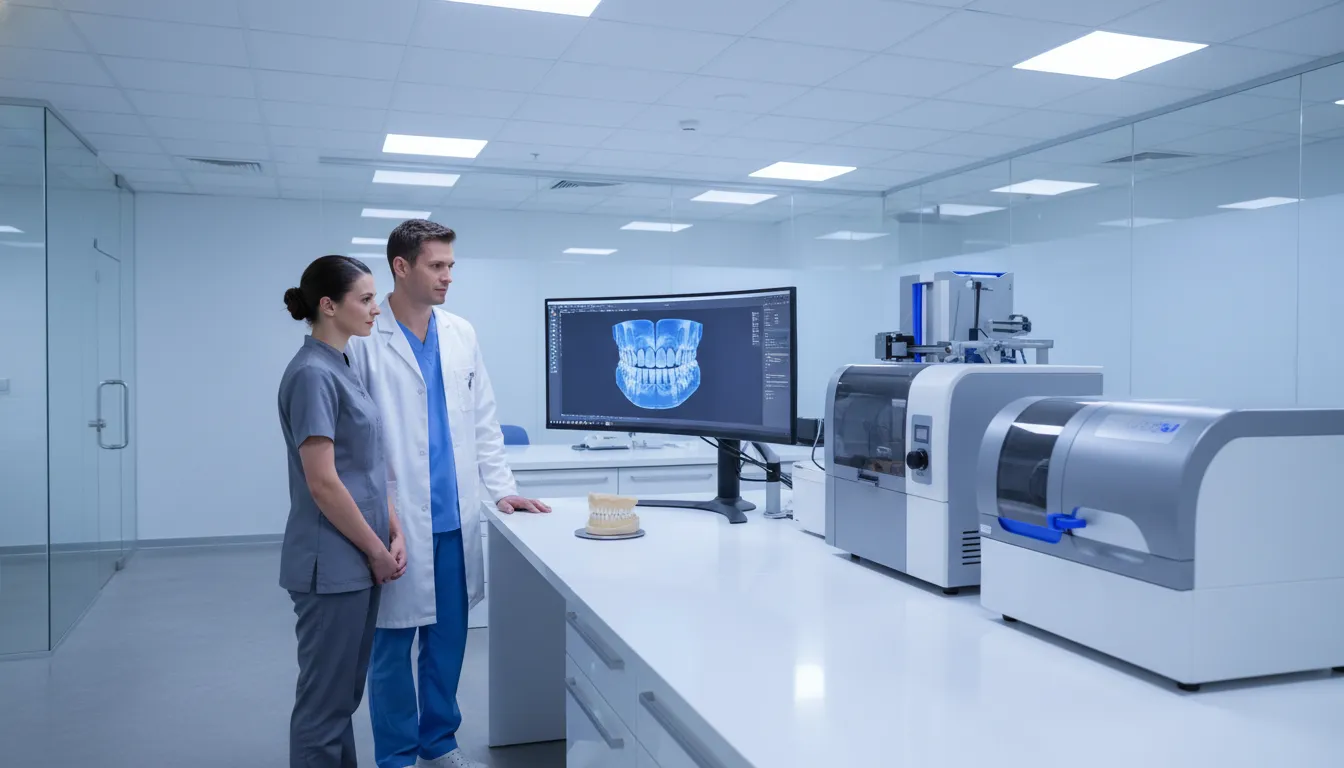
AvaDent replacement workflows remove manual steps by letting the practice retrieve an existing permanent file first. The clinician can then decide whether the patient needs a duplicate prosthesis or a clinically updated design.
Digital replacement is not simply about speed. It is about reducing repeated manual work that does not add value when the approved denture design already exists. A typical replacement workflow can follow a more controlled sequence.
- Confirm the replacement need. The patient reports a lost, fractured, worn, or otherwise unusable denture. The clinician confirms whether the issue calls for a duplicate, a repaired design, or a clinically updated prosthesis, using AvaDent overdenture and complete denture case context when relevant.
- Review the stored file. The practice locates the patient's permanent digital record and reviews the original design information. This helps the team evaluate whether the prior setup remains clinically appropriate.
- Decide whether changes are needed. If the patient was satisfied and the clinical conditions are stable, a close remake may be appropriate. If tissue, occlusion, esthetics, or function has changed, the file can be modified rather than abandoned.
- Place the replacement order. The existing design data supports a more direct order process. The practice can reduce repeated record-taking when the stored file already contains the necessary foundation.
- Manufacture and verify the prosthesis. Production can reference the approved design. AvaDent's digital manufacturing model is built to support consistency and quality control across the case, from product selection through clinical training and team adoption.
- Deliver with clearer expectations. The clinician can explain whether the patient is receiving a close remake or an updated version. That clarity improves confidence and reduces confusion during delivery.
Academic reviews of digital denture workflows have reported reduced clinical and laboratory time compared with conventional approaches. Including clinical time reductions measured in hours and lower chairside time in digital denture groups. Those findings support what clinicians see operationally: when records are already digital, the workflow can become more repeatable and less dependent on recreating information by hand.
Digital records vs. traditional denture remakes.
AvaDent permanent digital records give clinicians a more accessible starting point than physical casts, handwritten notes, or a worn denture alone. The advantage is repeatability without removing the need for clinical review.
The difference between a digital record and a traditional remake process becomes clear when the practice needs to act quickly. Both workflows still require clinical judgment. The difference is the quality and accessibility of the starting information.
| Remake factor. | Permanent digital record workflow. | Traditional remake workflow. |
|---|---|---|
| Starting point. | Approved design file and related case data. | Physical casts, notes, old denture, or new records. |
| Manual record steps. | Often reduced when the existing file remains clinically valid. | Often repeated if usable records are missing or incomplete. |
| Storage. | Digital file can be retained and accessed for future needs. | Physical storage may require space and can be misplaced or damaged. |
| Repeatability. | Design details can be referenced consistently. | Repeatability depends on the quality of available physical records. |
| Practice administration. | Supports clearer reorder workflows and case continuity. | May require more staff time to locate, ship, or recreate records. |
This comparison does not mean every digital remake should be automatic. It means the practice can make a more informed decision. A stored file can support a duplicate when the original design remains appropriate, or it can support a modified design when the patient needs an update.
For busy practices, that distinction is valuable. The team can avoid unnecessary duplication of work while still preserving the clinical review that protects the patient. That balance is where digital records become a practice-efficiency tool rather than only a manufacturing asset.
Ready to standardize replacement planning? Contact AvaDent to discuss a digital denture workflow for your practice.
Why faster remakes improve patient satisfaction.
AvaDent denture replacement digital records support patient satisfaction because a replacement can be planned from a familiar approved design rather than from incomplete recollection after a loss or fracture.
Patients do not experience denture replacement as an abstract workflow. They experience it as time without a prosthesis, uncertainty about appearance, difficulty eating, speech disruption, and frustration that a familiar appliance is suddenly gone. A faster, more predictable remake process directly affects that experience.
When a patient has already adapted to a denture, familiarity matters. The patient may value the tooth arrangement, lip support, bite feel, and overall appearance of the existing prosthesis. If the practice can use stored design information to recreate those approved characteristics, the replacement may feel less like an entirely new adjustment period.
Digital records also help set expectations. The clinician can explain whether the goal is a close remake of the previous design or an updated version that accounts for clinical changes. That conversation is easier when the team can reference the actual design record instead of relying on vague descriptions of what the patient liked.
Speed also has emotional value. A patient who loses a denture may feel embarrassed or anxious about social and professional obligations. Reducing delays can help the practice deliver a more reassuring experience. Even when a clinical update is necessary, the stored record can make the next step feel organized rather than reactive.
For the practice, satisfied replacement patients often require fewer clarification conversations and less administrative follow-up. The team can spend less time reconstructing the case history and more time guiding the patient through the appropriate treatment decision.
How does a permanent denture file support practice efficiency?.
AvaDent permanent denture files support practice efficiency by turning replacement requests into a managed workflow with clearer case retrieval, fewer repeated handoffs, and a documented source of truth.
Denture replacement digital records support efficiency because it turns a future replacement from an open-ended reconstruction into a managed workflow. For a single clinician, that can reduce time spent searching for records or repeating data that has already been captured. For a multi-location group or DSO, the operational value can be even greater.
Standardization is a major advantage. When teams use a consistent digital workflow, they can define how records are captured, how cases are stored, and how replacement requests are handled. That makes training easier and helps reduce variation between providers or locations.
Administrative storage is another practical issue. Physical casts and paper-heavy case materials require space and handling. They can also be difficult to locate when a patient returns years later. A digital record system reduces reliance on physical inventory and supports cleaner case retrieval.
AvaDent's broader digital denture workflow is designed around that kind of repeatability. Practices can connect case records, design, production, and replacement planning in a more unified process. Internal teams can also use AvaDent services and digital tools to manage case activity with more visibility.
Efficiency should not be measured only in minutes saved. It should also be measured in fewer avoidable steps, fewer unclear handoffs, fewer missing records, and fewer remake conversations that begin with incomplete information. A permanent file gives the practice a more dependable operational backbone.
When should clinicians update the record instead of duplicating it?.
AvaDent digital records are a clinical baseline, not an automatic duplicate order. Clinicians should update the record when tissue support, occlusion, esthetics, implant status, or patient expectations have changed.
The strongest replacement workflow is not always an exact duplicate. A stored digital file is a starting point, not a substitute for diagnosis. Clinicians still need to evaluate whether the patient's current anatomy, function, and expectations match the conditions under which the original denture was made.
An exact or near-exact remake may be appropriate when the patient was satisfied with the prosthesis. The denture was lost or damaged rather than clinically outdated, and the supporting tissues remain stable. In that situation, the digital file can help preserve the approved design while reducing unnecessary repetition.
An update may be better when the denture shows significant wear, the occlusion has changed, the patient reports soreness or instability, or esthetic preferences have shifted. Changes in ridge anatomy, tissue support, implant status, or opposing dentition can also make a simple duplicate less appropriate.
This is where digital records can improve clinical control. Instead of discarding the past design, the clinician can use it as a baseline. The team can identify what the patient liked, decide what must change, and communicate those changes more clearly. That makes the replacement process more precise than either blind duplication or a complete restart.
For AvaDent practices, the permanent file advantage is strongest when paired with sound clinical decision-making and team education through AvaDent training. The record keeps the case history accessible. The clinician determines how that history should guide the next prosthesis.
Frequently asked questions about denture replacement digital records.
How do digital denture records make replacement faster?.
Digital denture records make replacement faster by preserving the approved design information needed to guide a remake. When the file remains clinically valid, the practice may not need to repeat every manual record step before ordering a replacement.
Can lost or broken dentures be replaced exactly with digital records?.
In many cases, a stored digital file can support a close remake of the approved denture design. The clinician should still confirm that the patient's oral condition and treatment goals have not changed in a way that requires an updated design.
How many appointments are needed for a denture replacement with digital records?.
The number of appointments depends on the patient's condition and whether changes are needed. When the existing record is usable and the patient needs a close replacement, digital records can reduce repeated record-taking and simplify the path to production.
Are there cost benefits to keeping a digital record of dentures?.
Digital records can reduce administrative work, physical storage, repeated manual steps, and avoidable remakes. Exact fees depend on the practice and case, but the operational benefit comes from having a reliable file available when replacement is needed.
What is the primary advantage of AvaDent's permanent digital files?.
The primary advantage is continuity. AvaDent's permanent digital files help clinicians access the original denture design for future replacement, duplication, or controlled updates, supporting predictable care beyond the first prosthesis.
Talk to AvaDent about faster denture replacements.
If your practice wants a more predictable way to manage lost, damaged, or worn dentures, permanent digital files can make replacement planning more efficient. AvaDent helps clinicians move beyond one-time denture fabrication and toward a reusable digital record that supports future care.
Contact AvaDent to discuss how denture replacement digital records can support your clinical workflow, patient satisfaction, and long-term practice efficiency.