




When a removable prosthesis leaves the operatory, denture identification can be the small clinical detail that prevents a costly mix-up, supports a faster recovery after loss, and gives every team member a clearer case record. For clinicians, the question is not simply whether a denture can be marked. The more useful question is how to make identification durable, readable, privacy-conscious, and repeatable without adding unnecessary friction to the workflow.
Review denture ID options for your next case
Denture identification is the practice of associating a removable dental prosthesis with its owner through a visible or embedded identifier. A thoughtful method helps clinicians, laboratories, care facilities, and patients distinguish one prosthesis from another. The best approach fits the clinical situation, follows applicable requirements, protects patient privacy, and remains useful throughout the life of the denture.
A reliable identification process is especially valuable when patients receive care from several people or move between settings. Dentures may be removed for cleaning, treatment, hospitalization, or routine assistance. Each handoff creates an opportunity for a prosthesis to be misplaced or confused with another. A readable identifier gives the next person in the chain a practical way to resolve that uncertainty.
Identification also complements the digital case record. When the clinical team, laboratory, and patient use the same documented identifier, they can communicate about the correct prosthesis with less ambiguity. That connection can make future service, evaluation, and replacement discussions more efficient.
Why does denture identification matter in clinical care?
Denture marking may look like a minor production decision, but its consequences extend beyond the laboratory bench. It can affect day-to-day handling, continuity of care, communication, and the ability to connect a prosthesis with its owner. A clear process turns identification from an occasional add-on into a dependable part of case planning.
Reducing confusion during care transitions
Patients who live in shared care environments may have their dentures removed and cleaned with assistance. In a setting where several prostheses are handled at once, visual similarity can make ownership difficult to determine. A legible identifier helps staff return the correct denture to the correct person without relying on memory or guesswork.
The same principle applies during hospital stays, specialist visits, repairs, and laboratory service. A defined denture identification method gives everyone involved a common reference. This can reduce avoidable delays and the stress a patient may experience when an essential prosthesis cannot be located quickly.
Supporting useful clinical records
An identifier is most valuable when it connects to a well-maintained case record. The record can document the selected marking method, the identifier used, the date of delivery, and other case details the practice considers appropriate. If the patient later needs service or replacement, the team has a clearer starting point.
For digitally designed dentures, stored case files can add another layer of continuity. The identifier used in the prosthesis can be associated with the digital design and production record. This does not replace careful patient verification, but it can help the practice and laboratory discuss the correct case with confidence.
Contributing to identification efforts
Dental records can contribute to forensic identification when other methods are limited. A marked denture may provide useful information that helps qualified professionals connect a prosthesis to existing records. Forensic literature has long discussed denture marking as one potential part of a broader identification process.
Clinicians should avoid presenting a denture mark as a guaranteed or standalone identification method. Its usefulness depends on the information included, the condition of the prosthesis, the quality of associated records, and the procedures used by the responsible authorities. The practical clinical takeaway is straightforward: a durable, documented identifier may preserve information that would otherwise be unavailable.
What legal, ethical, and privacy considerations apply?
Requirements for denture identification are not uniform. Rules can differ by location, type of prosthesis, care setting, and other factors. Because requirements may change, clinicians and laboratories should confirm the current expectations that apply to their work rather than relying on a general online summary.
Verify applicable requirements
Before establishing a standard, determine whether the relevant jurisdiction specifies who is responsible for identification, what information must be included, or how the mark should be applied. The practice may also need to account for laboratory procedures and policies in facilities where patients receive care.
A useful internal protocol records the source consulted, the date it was checked, and the decision made by the practice. This makes future review easier. AvaDent's denture ID resource can help clinicians begin the discussion, but the appropriate authority should remain the source for current requirements.
Use a privacy-conscious identifier
More information is not always better. A denture is a personal item that may be seen or handled by people outside the dental practice. The identifier should help connect the prosthesis with the correct owner while avoiding unnecessary exposure of sensitive information.
When considering a name, number, QR code, or another method, ask who can read it, what it reveals, and where any linked information is stored. If a scannable code points to a digital destination, the practice should understand who controls that destination and how access is managed. The clinical and laboratory teams should agree on a method before production.
Discuss identification with the patient
A brief patient conversation can prevent confusion later. Explain why identification is being considered, what will appear on or in the denture, where it will be placed, and how the practice will document it. This gives the patient an opportunity to ask questions and helps the team confirm expectations before the case moves forward.
The conversation is also an appropriate time to discuss daily handling. Patients and caregivers should know how to clean and store the prosthesis without damaging the mark. If a denture is misplaced, they should know whom to contact and what information will help the care team search for it.
How do traditional denture marking methods compare?
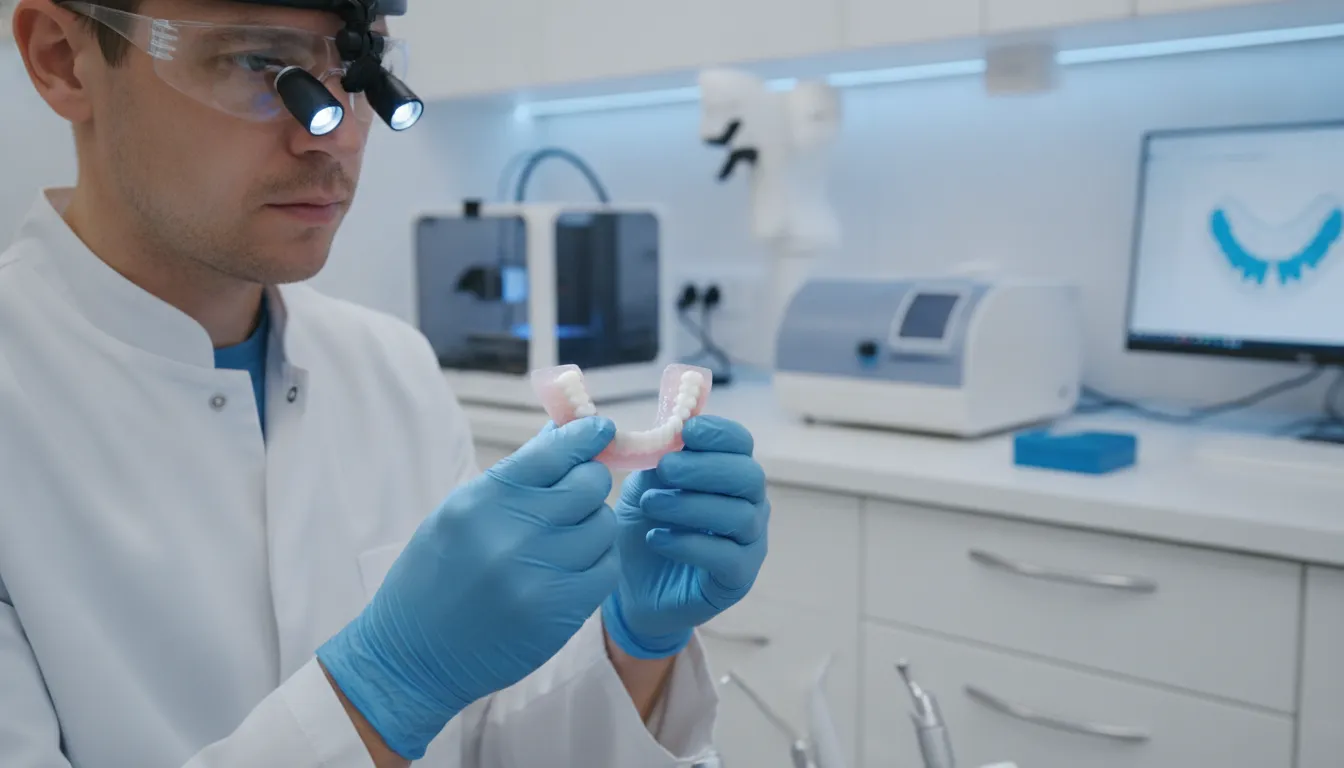
Denture identification methods generally fall into two broad categories: surface marking and inclusion marking. Surface techniques place information on the exterior. Inclusion techniques place a label, code, or other identifier within the denture base. Each option creates a different balance of durability, readability, production effort, appearance, and data capacity.
Surface marking
Surface marking can be direct and accessible. Depending on the technique, a name or code may be written, applied, or engraved on an external area. Its main advantage is simplicity, particularly when an existing denture needs an identifier and cannot be remade.
The limitation is exposure. A surface mark can be affected by normal handling, cleaning, wear, and polishing. An engraved area may also change the surface character if it is not carefully planned and finished. Clinicians should evaluate whether the selected technique remains readable and whether it creates any cleaning or comfort concerns.
Inclusion marking
Inclusion marking protects the identifier within the denture base. The information may be easier to preserve because it is not directly exposed in the same way as a surface mark. It can also offer a cleaner visual result when its placement and size are planned carefully.
Execution matters. The laboratory needs enough space to place the identifier without compromising the intended design, fit, finish, or strength. The team should define the location and information before production rather than treating the mark as a last-minute addition.
Comparison of common approaches
| Approach | Primary advantage | Important limitation | Workflow consideration |
|---|---|---|---|
| Applied surface mark | Simple to add to some existing dentures | May fade or wear with use and cleaning | Needs periodic readability checks |
| Engraved mark | Direct and visible | Can affect the surface if poorly placed or finished | Requires careful location and finishing |
| Embedded printed label | Readable information protected within the base | Requires planning and suitable placement | Best coordinated before laboratory production |
| Embedded scannable code | Can connect a compact mark with a defined reference | Usefulness depends on readability and responsible data management | Requires agreement on the code and linked destination |
| Electronic identifier | May support machine-assisted reading | May require compatible equipment and added planning | Confirm feasibility with the laboratory |
No single method is automatically right for every patient. A straightforward readable label may be appropriate in one situation, while another case may benefit from an embedded code tied to a controlled case reference. The clinical team should select the simplest method that meets the patient's needs, the intended setting, and applicable requirements.
Explore digital denture products for a more repeatable case plan
How digital dentures simplify identification
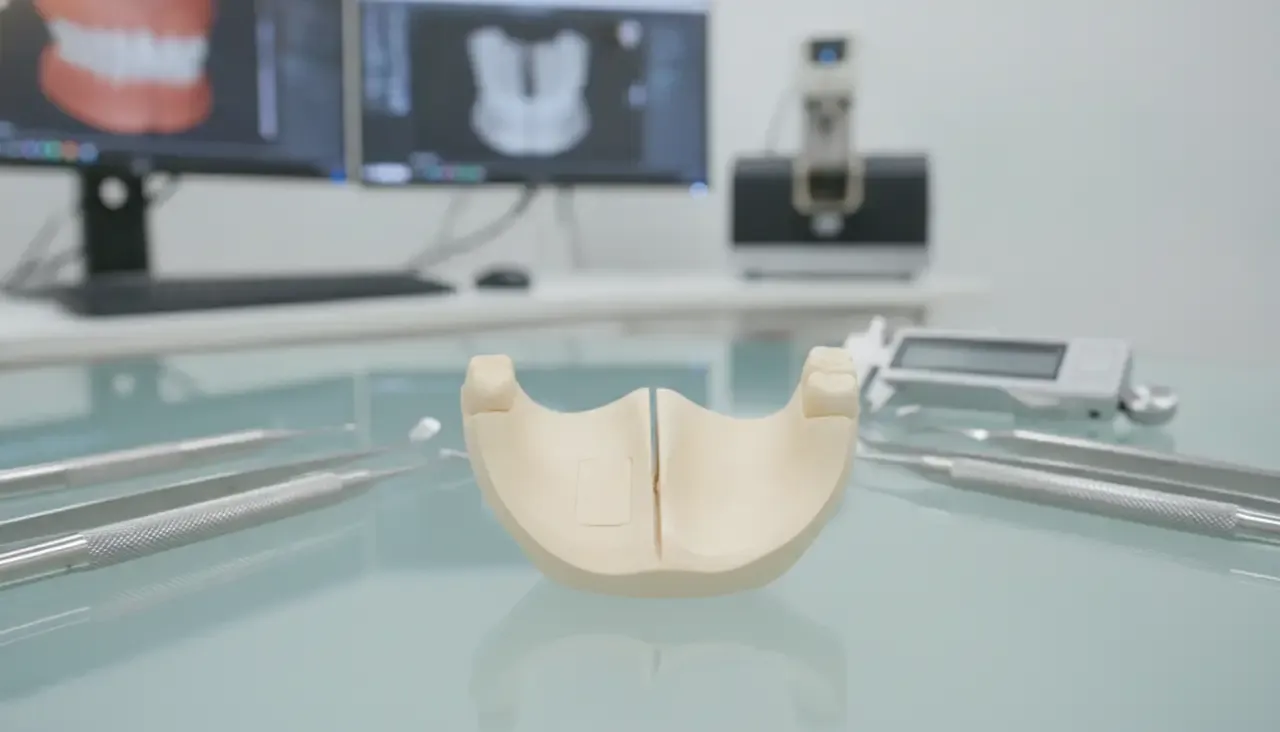
A digital denture workflow gives the clinical and laboratory teams an opportunity to consider identification before the prosthesis is produced. Instead of adding a mark after delivery, the team can define the identifier, placement, and documentation during case planning. That makes denture identification easier to repeat across patients, locations, and providers.
Planning the identifier before production
Early planning allows the laboratory to evaluate the proposed mark in relation to the denture design. The team can consider visibility, esthetics, readability, available space, and the intended method. If an identifier is unsuitable for the selected location, the issue can be addressed before production rather than discovered after finishing.
A consistent prescription or order process is important. The clinician should provide the agreed identifier in a clear format and verify it before submission. The laboratory should confirm how it will be incorporated and note any design constraints. This simple exchange helps prevent transcription errors and late changes.
Connecting the prosthesis to the digital case record
Digital records can preserve details that support future communication. The practice can document the identifier alongside the patient's case information, while the laboratory can associate it with the relevant design and production files. If questions arise later, both teams have a reference for the delivered prosthesis.
Stored files can also support a more efficient replacement conversation when a denture is lost or damaged. A remake still requires appropriate clinical review and confirmation, but an organized digital record may reduce the need to reconstruct every production detail from the beginning.
Creating consistency across a growing organization
For multi-location practices and dental service organizations, consistency is a major advantage. A written identification standard can define when denture identification is discussed, how the selected information is verified, where it is recorded, and how the laboratory receives it. Staff members do not need to invent a process for every case.
Standardization should not eliminate clinical judgment. Some patients, prostheses, or care settings may require a different approach. A strong protocol defines the usual path while giving clinicians a clear way to document exceptions.
How to add denture identification to the workflow
The most effective process is one the team can follow consistently. It should be specific enough to prevent omissions but simple enough to fit normal clinical and laboratory communication. The following framework can be adapted to a practice's needs and verified requirements.
1. Define the practice standard
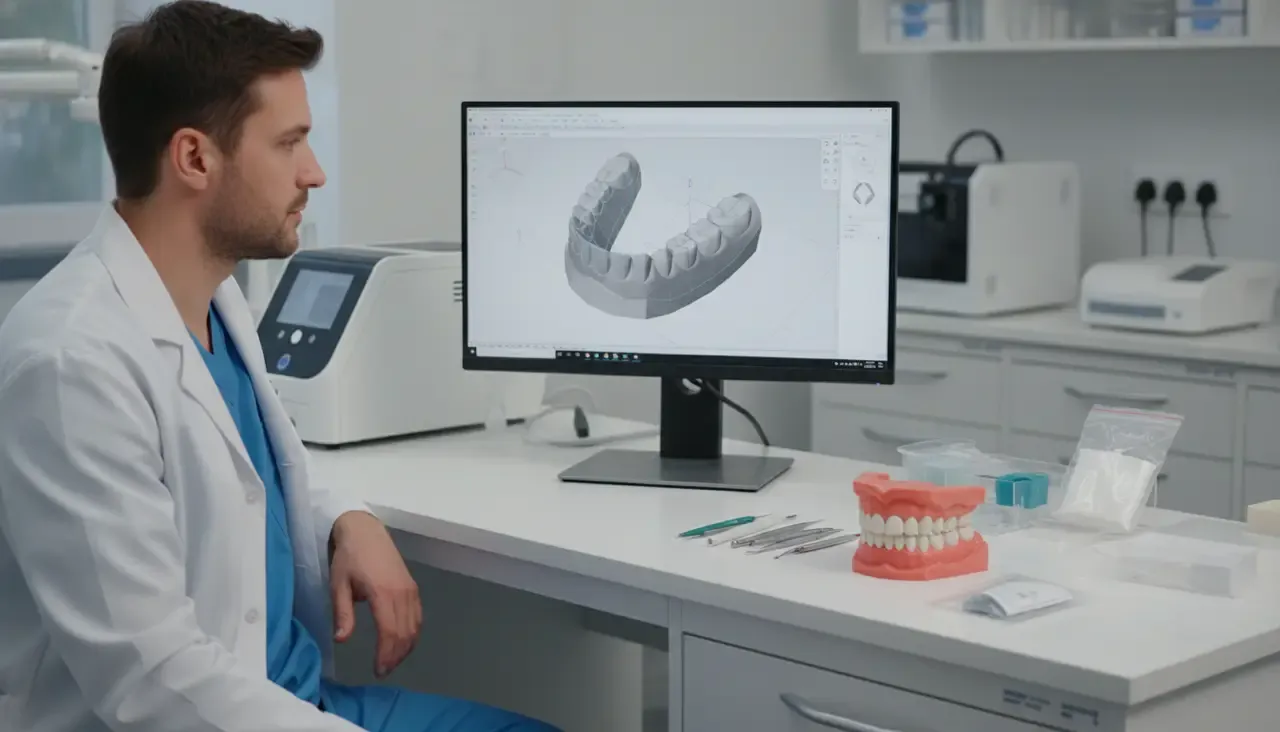
Decide which cases should include identification, what methods are acceptable, what information may be used, and who is responsible for each decision. Include privacy considerations and a process for confirming current requirements. Put the standard in writing so clinicians, assistants, and administrative staff work from the same expectations.
2. Discuss the plan with the patient
Explain the purpose and proposed method in plain language. Confirm what information will appear and answer questions about appearance, handling, and privacy. Document the conversation according to the practice's normal procedures.
3. Verify the identifier before the case is sent
Errors are easier to prevent than correct. Use a defined verification step to confirm spelling, numbers, and the selected format. Avoid relying on a rushed note or memory. The same verified information should appear in the clinical record and the laboratory communication.
4. Coordinate location and method with the laboratory
Provide a clear request and ask the laboratory to confirm feasibility. The selected location should support readability and appearance without interfering with the intended design. In a digital process, this discussion can happen while the case is still being planned. AvaDent's digital denture workflow shows how coordinated steps can make complex case details more manageable.
5. Inspect and document at delivery
At delivery, verify that the identifier matches the record and remains readable. Confirm that its placement does not create an obvious surface, comfort, or cleaning issue. Record the completed method and any relevant instructions provided to the patient or caregiver.
6. Include identification in follow-up
During routine evaluations, check that the mark remains readable and useful. If wear, repair, relining, or another change affects the identifier, determine whether it should be restored or replaced. This turns denture identification into an ongoing part of prosthesis care rather than a one-time production detail.
Best practices for durable and useful identification
A mark only creates value when people can interpret it and connect it to the correct record. Durability is important, but it is not the only measure of quality. Good denture identification balances readability, appropriate disclosure, thoughtful placement, accurate documentation, and practical use by the people likely to encounter it.
Keep the format consistent
Use a consistent convention so staff members know what they are looking for and where to find it. If the practice uses more than one method, document when each method is appropriate. Consistency reduces ambiguity and makes training easier.
Choose information deliberately
Include enough information to support the intended purpose without exposing unnecessary details. A longer identifier is not necessarily more useful if it is difficult to read, easy to misinterpret, or linked to information without suitable controls. Involve the patient and laboratory in the decision when appropriate.
Plan for real-world cleaning and handling
Consider how the denture will be used, cleaned, stored, and transported. A method that looks clear at delivery may become less useful if it is poorly suited to normal care. Provide handling instructions that support both the prosthesis and the identification method.
Train the broader care team
Identification works best when caregivers and facility staff know it exists. With the patient's permission and according to the relevant care process, explain where to look and what to do if the denture is misplaced. The mark should support a clear response, not simply sit unused in the base.
Review the process periodically
Assign responsibility for reviewing the protocol. Confirm that the selected methods remain available, that the laboratory can support them, and that the practice's requirements review is current. Feedback from clinicians, patients, caregivers, and laboratory partners can reveal where the process needs improvement.
Frequently asked questions about denture identification
Why is denture identification important?
Denture identification helps connect a removable prosthesis with its owner. It can support the return of a misplaced denture, improve communication across care settings, and preserve a useful connection to clinical and laboratory records. A documented mark may also contribute information during a broader forensic identification process.
Are dentists required to label dentures?
Requirements vary by jurisdiction and may change. Dental professionals should verify the current rules that apply to their practice, laboratory, and patient setting with the appropriate authority. Even when a particular method is not required, a practice may choose to use identification as part of a consistent care protocol.
What information should denture identification include?
The information should be sufficient for the intended purpose while respecting privacy and applicable requirements. The right choice depends on the patient, care setting, identification method, and practice protocol. The team should verify the exact identifier before production and document it in the case record.
What is the difference between surface and inclusion marking?
Surface marking places the identifier on the exterior of the denture, which may make it easier to add to an existing prosthesis but more exposed to wear. Inclusion marking places the identifier within the denture base, which can protect it but generally requires more planning during production.
How do digital dentures simplify identification?
A digital workflow allows the clinician and laboratory to plan the identifier before production and associate it with the digital case record. This can make the process more repeatable, improve communication, and preserve useful information for future service or replacement discussions.
Should every denture use a QR code?
Not necessarily. A QR code is one possible approach, but its value depends on readability, placement, the information it represents, and how any linked destination is managed. The clinical team should choose the simplest appropriate method for the patient and verify it with the laboratory.
Talk with AvaDent about adding identification to your digital workflow