




AI is no longer just drawing dentures; it is engineering how they function before milling. For clinicians, that means smarter occlusion, verified production, and fewer surprises at delivery.
Contact AvaDent to learn how AI-enabled digital workflows can support your practice.
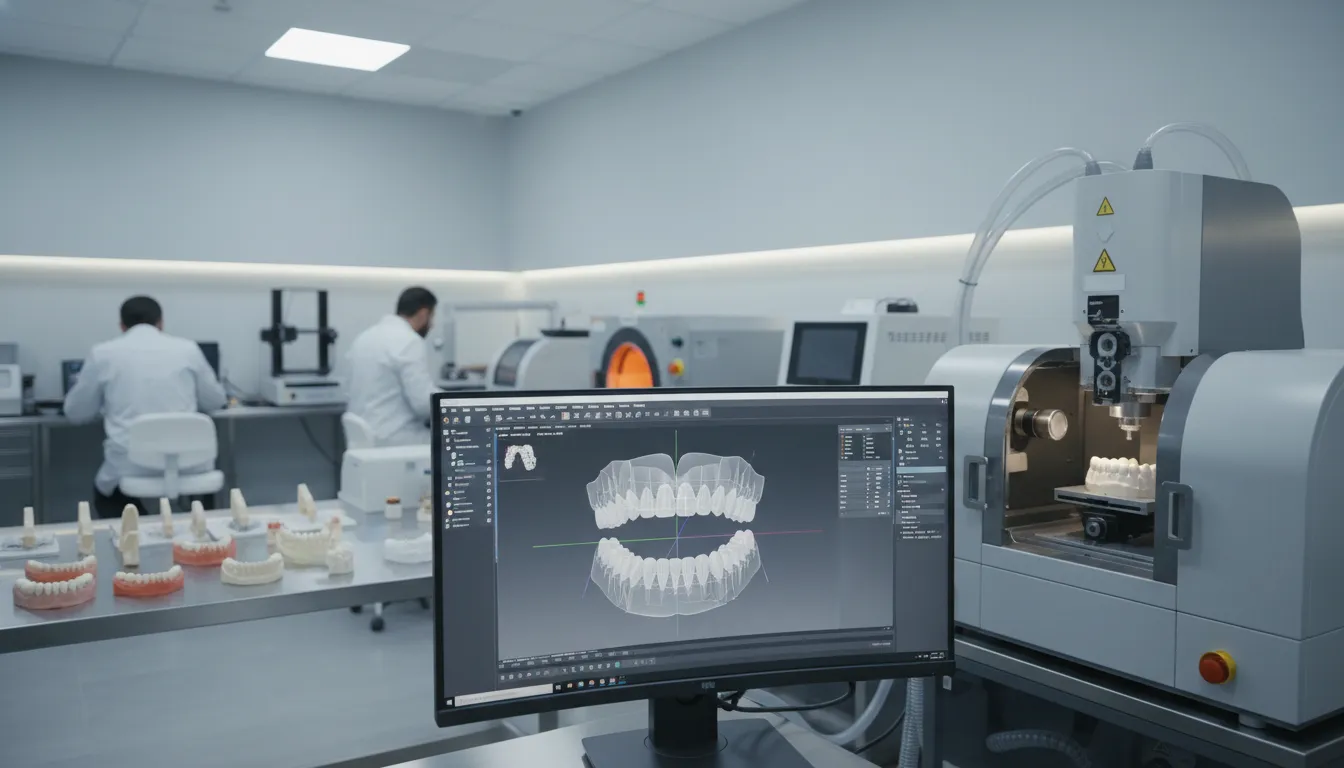
AI denture design uses software intelligence to automate clinical prosthetic planning, simulate function, and carry a patient-specific digital plan through manufacturing and quality control. Research shows AI-based CAD can significantly reduce prosthetic design time, helping clinicians move from manual setup toward faster, more consistent, data-guided decisions. AvaDent's CAE workflow applies Adaptive Occlusion across 70 billion data points to dynamically articulate and equilibrate tooth contacts before milling. Every finished prosthetic is then 3D scanned against its digital design, creating a closed quality loop that supports consistent, predictable fit, function, and delivery. Beyond fabrication, Prospira extends AI into practice growth through predictive lead engagement, automated nurturing, conversion analysis, and team communication training.
The key question is not whether software can draw a denture, but whether it can connect clinical records, engineering, production, and practice performance. AI denture design is moving prosthetics from CAD to clinical intelligence, and the shift becomes clear at each step. Here's how.
AI denture design is moving prosthetics from CAD to clinical intelligence
AI denture design uses software to help interpret clinical inputs, test design choices, and prepare a prosthesis for reliable production. It does not replace the dentist, prosthodontist, or skilled technician. Instead, it supports their judgment with repeatable analysis across the design and manufacturing process.
Beyond digital drafting
Manual denture design depends on physical records, technician skill, and several hands-on steps. Basic CAD/CAM moves much of that work into a digital file. The clinician and lab can shape the prosthesis on screen, then send the approved design to a mill or printer.
Clinical intelligence adds another layer. Software can assess design choices, simulate how the prosthesis may function, and flag details that need review. This turns the digital model from a drawing into a working clinical and engineering record. AvaDent's approach to advanced digital denture design shows how engineering analysis can guide decisions before production.
Decision support before manufacturing
An AI-assisted workflow can help the dental team review fit, tooth position, occlusion, and production limits before making the final prosthesis. That support matters because a design must satisfy both clinical goals and manufacturing needs. A useful system makes those needs easier to review together.
Occlusion is one clear example. Digital tools can model articulation and equilibration before the case reaches the chair. Clinicians still set the treatment plan and approve the result. Yet AI-powered adaptive occlusion can give them a more informed starting point for that review.
Good decision support also keeps the process clear. The team should be able to see the records, review proposed changes, and understand what will be produced. A recommendation without clinical context is not enough.
A closed digital workflow
The value of AI denture design extends beyond the design screen. The approved file can guide production, support quality checks, and remain available for future reference. Each stage uses the same digital record, which helps reduce gaps between the prescription, design, and finished prosthesis.
Manufacturing feedback can also improve the workflow over time. Finished prosthetics can be scanned and compared with their design files before delivery. This creates a practical check on whether production matched the approved plan. AvaDent's automated denture manufacturing workflow connects digital records, production, and verification in one process.
For clinicians, the shift is simple but important. CAD helps create a digital denture. Clinical intelligence helps the team evaluate that denture, make informed choices, and carry the approved design through manufacturing.
Where AI fits in the digital denture workflow
AI denture design can support several parts of a digital workflow, but it does not replace sound clinical records or professional review. Its role is to help teams sort data, speed routine design tasks, and flag details for closer inspection. The clinician and dental laboratory still guide each case.
From clinical records to a reviewed design
The workflow starts with accurate scans, impressions, bite records, photos, and case instructions. Software can organize these inputs and use them to shape an initial design proposal. Research on AI-based dental CAD found that AI systems reduced design time in the prosthetics studied, according to a peer-reviewed comparison of automated design systems.
-
Capture the records. The clinical team gathers the anatomy, jaw relation, esthetic goals, and treatment needs. AI cannot correct missing or poor source records.
-
Build the digital proposal. Design software can help set tooth position, base contours, and other case features. The proposed design gives technicians a practical starting point.
-
Review and refine. A trained professional checks fit, function, esthetics, and case instructions. Digital tools may help flag issues, but the team decides what to change.
-
Prepare for manufacturing. Once approved, the final file guides milling, printing, or a combined production method. Automation helps carry the approved design into production with less manual transfer.
-
Verify the finished prosthetic. Quality control compares the completed denture with the approved file. Any mismatch can be reviewed before the case reaches the practice.
-
Store the case record. The final design and related case data become a reusable digital record. That record can support future review or a simpler replacement process.
Human review at the decision points
AI should support decisions rather than make them without review. A technician or clinician must confirm that a suggested design fits the prescribed clinical plan. This review is most useful before approval and manufacturing, when the team can still revise the file.
A clear handoff also matters. AvaDent's digital denture workflow shows how clinical and production stages connect. Each handoff should preserve the records, approved changes, and instructions that shaped the final design.
Production checks and stored records
Manufacturing follows the approved design, not an unreviewed AI suggestion. Digital production can make the file the common reference for technicians and quality teams. For a broader view of these production stages, see the automated denture manufacturing process.
Quality control closes the loop by checking the finished prosthetic against that reference. AvaDent uses 3D scanning to compare a completed prosthetic with its digital design file. The stored record then preserves the approved case, which can make later replacement easier when clinical needs allow.
How Adaptive Occlusion supports better clinical outcomes
Adaptive Occlusion gives AI denture design a clinical job: evaluating how denture teeth contact during simulated movement before manufacturing starts. By reviewing articulation and equilibration upstream, the team can refine occlusion in the digital file instead of relying only on chairside correction after delivery.
Occlusion evaluated before manufacturing
Better occlusion starts with testing how the proposed denture functions, not just how it looks in a static design. AvaDent's Adaptive Occlusion uses dynamic digital articulation to assess contact as the simulated jaw moves. Engineers can then equilibrate the digital design before the prosthesis enters manufacturing.
This step gives AI denture design a clear clinical purpose: help shape a balanced occlusal plan before the denture reaches the chair. A PubMed-indexed study of AI-based dental CAD found that AI systems reduced design time for the prostheses studied. Adaptive Occlusion applies digital analysis to a different need, refining how denture teeth meet through motion.
Data-informed dynamic articulation
Adaptive Occlusion draws on 70 billion data points, according to AvaDent's dashboard technology information. That scale supports analysis of contact patterns during digital articulation. It does not replace the clinician's records or judgment. Instead, it helps engineers test the proposed setup against a broad base of digital information.
The software can show where contacts may need to change before milling begins. Engineers can adjust the setup in the digital file, repeat the articulation, and review the revised result. This repeatable process moves equilibration upstream, where changes do not require grinding a finished prosthesis.
- Dynamic articulation reviews contacts through simulated movement.
- Digital equilibration adjusts the proposed setup before manufacturing.
- Repeated review helps engineers refine the occlusal plan.
- The approved design file guides the manufacturing stage.
Because the review happens in a digital model, the team can compare each revision without remaking a physical setup. That creates a clear design trail from initial articulation through the approved occlusal scheme. It also keeps manufacturing focused on producing the reviewed plan.
Fewer chairside adjustments by design
Chairside adjustment is often treated as a final correction step. Adaptive Occlusion takes another approach by making fewer adjustments a designed outcome. Potential contact issues can be addressed in the file before they become physical features of the denture.
This does not mean every delivery will be adjustment-free. Clinical records, jaw relations, tissue conditions, and patient function still affect the final result. The value lies in giving the team a tested digital starting point instead of relying only on correction after manufacture.
For clinicians, that approach can support more predictable delivery visits and a clearer path when changes are needed. AvaDent's guide to AI-powered adaptive occlusion explains how the software fits within the broader digital workflow. The occlusal plan remains tied to the saved design, helping the lab and practice work from the same record.
See AvaDent's digital denture workflow to evaluate how AI-enabled records, occlusion planning, and production checks can support your cases.
Review AvaDent's digital workflow to see how AI denture design moves from records to review, manufacturing, and delivery.
AI-driven manufacturing connects design intent to the finished prosthetic
AI denture design does not end when a technician approves the digital model. Manufacturing must carry that approved geometry into the finished prosthetic with as little variation as possible. Computer-aided engineering (CAE) helps connect design choices, material needs, tool paths, and quality checks in one controlled workflow.
AI can support faster decisions before production begins. A study of AI-based dental CAD systems found that both systems tested reduced design time. The technician still reviews the case, while software helps turn clinical inputs into a design ready for production.
Three manufacturing approaches
Traditional and digital methods can all produce a prosthetic, but they manage design intent in different ways. The main difference is how much of the approved design remains measurable from planning through final inspection.
|
Comparison point. |
Traditional workflow. |
Digital CAD/CAM workflow. |
AI-assisted and CAE workflow. |
|---|---|---|---|
|
Design input. |
Physical records and manual setup. |
Scans and technician-built CAD model. |
Scans, CAD model, and software-guided analysis. |
|
Production planning. |
Craft steps set by the technician. |
Digital tool paths prepared for milling or printing. |
CAE links design rules to production choices. |
|
Material path. |
Processed acrylic and separate teeth. |
Milled or printed components. |
Monolithic or hybrid material strategy. |
|
Quality check. |
Visual and physical inspection. |
Digital review plus physical inspection. |
Finished scan compared with approved design file. |
|
Future use. |
Depends on stored physical records. |
Digital file supports repeat production. |
Design and inspection data support repeat production. |
Material and production paths
CAE helps the production team select a manufacturing path that fits the prosthetic design. CNC milling can shape a denture from a solid material blank. AvaDent uses high-density PMMA and monolithic XCL technology, which keep the teeth and base within one continuous structure.
Some implant cases need a different mix of strength, form, and material. AvaMax combines a 3D-printed titanium core with high-density PMMA. This is a hybrid additive and subtractive process: printing forms the titanium structure, while milling shapes the PMMA around the approved design.
The value lies in keeping the material plan tied to the case design. For a wider view of these linked stages, AvaDent's guide to automated denture manufacturing explains how records move through a digital workflow.
Verification against the approved file
Production is not complete when the machine stops. AvaDent scans the finished prosthetic in 3D, then compares that scan with the digital design file. This check shows whether the manufactured form matches the geometry that the clinical and engineering teams approved.
A measurable check creates a clear feedback loop. If the scan shows a meaningful difference, the team can review the source before the case moves forward. The same digital record can also support a future replacement without rebuilding the entire design from physical records.
This final comparison is what connects CAE to quality control. It preserves the logic behind advanced digital denture design through milling, hybrid production, inspection, and delivery.
Can AI improve denture fit, function, and repeatability?
Yes, AI denture design can support better fit, function, and repeatability when it works within a sound clinical and manufacturing process. It can help teams assess anatomy, refine design choices, and apply the same rules across cases. Still, the final result depends on accurate records, skilled review, material choice, and precise production.
Anatomical fit starts with good records
AI can help a design team interpret digital scans and shape a prosthesis around the recorded anatomy. The software may flag areas that need relief, support, or closer review. It does not correct a poor scan or replace the clinician's judgment about tissue, borders, and the patient's needs.
Evidence from other dental prosthetics shows why this approach has promise. One study of AI-generated crowns found gains in marginal adaptation, contacts, anatomical form, and contour. Crown findings cannot prove denture outcomes, but they show how trained design systems may improve detailed prosthetic design.
Occlusion and fewer adjustments
Function depends on more than how the base fits. Tooth position, contacts, and movement also affect how a denture performs during speech and chewing. Digital tools can model these relationships before manufacturing, giving the technical team a chance to find and correct likely conflicts.
AvaDent's AI-powered adaptive occlusion uses dynamic digital articulation and equilibration to refine occlusion before production. This step is designed to reduce chairside adjustments, though each patient still needs a clinical check. When intake records are complete, the process can make the first fitting more predictable.
- Fit review can account for the recorded supporting anatomy.
- Occlusal review can check contacts through simulated movement.
- Digital comparison can help verify that production matches the approved design.
Repeatable design and easier replacement
A major benefit of a digital workflow is the reusable design file. Once the clinical team approves the fit, tooth setup, and occlusion, that record can guide later production. It also gives the lab a clear reference when it reviews a remake or updates a case.
This repeatability does not mean every replacement should be made without a new exam. Anatomy and clinical needs can change over time. Yet a stored record gives the team a useful starting point and may shorten the path to a suitable replacement.
For a closer look at how engineering, design, and production connect, see AvaDent's guide to advanced digital denture design. AI is most useful as one part of that controlled workflow. It supports consistent decisions, while clinicians and technicians remain responsible for the final result.
What Prospira AI adds beyond the prosthetic workflow
Prospira extends the AI conversation from prosthetic design into practice growth. For dental teams, that means AI can support not only digital denture planning and manufacturing, but also lead quality, patient follow-up, treatment communication, and the business systems that keep advanced prosthetic services moving.
AI in dentistry also affects practice growth
AI denture design is only one part of a larger shift in dentistry. A precise prosthetic workflow helps the clinical side of care, but practices also need steady demand, better patient communication, and trained teams that can explain treatment clearly.
That is where AvaDent's Prospira AI platform fits the broader story. Prospira is positioned as an AI-powered practice growth platform for dental practices. It extends AvaDent's digital dentistry role beyond manufacturing and into the business systems that help practices grow full-arch, overdenture, implant, and cosmetic cases.
Marketing AI for better lead quality
Prospira focuses on marketing AI and training AI. On the marketing side, the platform is built around predictive analytics, lead qualification, automated lead nurturing, conversion optimization, and territory-exclusive marketing. The goal is not simply more form fills. The goal is to help practices focus on patients who are more likely to need and accept high-value treatment.
For a denture or implant practice, that distinction matters. A practice can invest in advanced prosthetic workflows, but still struggle if the right patients never reach the consultation stage. AI can help sort demand signals, score lead intent, and support follow-up timing. Those tools can reduce wasted effort while giving the team more context before a patient conversation begins.
Training AI for stronger case conversations
Prospira also connects AI to team training and patient communication. That is important because prosthetic dentistry is not only a lab or design challenge. It is also a communication challenge. Patients need to understand the difference between a conventional denture, a monolithic digital denture, an overdenture, and a hybrid prosthetic.
When teams have better coaching and clearer systems, they can explain treatment choices with more confidence. That supports a smoother path from first inquiry to case acceptance. It also helps practices align the clinical value of digital dentures with the business need for predictable growth.
For clinicians, the takeaway is simple: AI should not be treated as a single software feature. It is becoming a connected layer across design, manufacturing, quality control, marketing, training, and patient communication. AvaDent's position is strongest when those pieces work together, from the digital design file to the patient conversation that starts the case.
Frequently asked questions about AI denture design
Can AI make dentures?
AI can help design dentures, but it does not replace the clinician or the manufacturing process. It supports digital planning, occlusion decisions, quality checks, and workflow efficiency before the prosthetic is milled, printed, finished, and reviewed.
How is AI used in denture design?
AI is used to analyze records, guide tooth setup, support occlusal planning, compare design intent against manufacturing output, and help teams make more consistent design choices. In an AvaDent workflow, AI denture design connects with CAE, Adaptive Occlusion, and digital verification.
Does AI improve denture fit?
AI can support better denture fit when it is paired with accurate records, sound clinical judgment, and precise manufacturing. It can help optimize anatomy, occlusion, and repeatability, but final outcomes still depend on the full clinical and lab workflow.
What are the benefits of AI in removable partial denture design?
For removable partial dentures, AI can help evaluate design options, reduce repetitive manual steps, and support consistent framework planning. The practical benefit is a more efficient workflow with fewer avoidable design variables for the clinical and laboratory team.
Ready to Put AI-Enabled Denture Workflows to Work?
Waiting to assess AI-enabled workflows can prolong manual coordination, limit visibility, and delay improvements that matter to your clinical team. Starting the conversation now gives your practice time to evaluate fit, prepare staff, and plan a measured path forward with clear goals. You can identify practical next steps before rising workflow demands or new growth goals make the decision more urgent and harder to manage.
Contact AvaDent to discuss AI denture design, digital dentures, and workflow priorities for your practice.
Request a conversation now to begin evaluating available options on a timeline that supports thoughtful adoption, staff readiness, and consistent clinical operations.