




When a denture fractures, the material decision is often part of the explanation. A stronger denture material can support a more resilient prosthesis, but strength is not the only clinical variable. Base geometry, thickness, occlusal forces, support, hygiene, the tooth-to-base connection, and the intended prosthesis type all affect performance. The useful question is not simply whether one resin is stronger than another. It is whether the material and manufacturing method fit the case.
Review your denture material and manufacturing workflow with AvaDent
For complete dentures, AvaDent XCL is a monolithic, milled high-density PMMA option. For implant-supported prostheses, AvaMax combines a titanium framework with a precision-milled XCL PMMA monolith. These are different clinical pathways, not interchangeable prescriptions. This guide compares the engineering concepts behind each option and shows how clinicians can connect material selection to fracture risk, hygiene, available space, and workflow.
What makes a denture material stronger?
A denture material is usually described as stronger when it resists a greater amount of stress before bending or fracturing. Flexural strength is one important laboratory measure. It describes how much bending stress a specimen withstands before failure. Impact strength, fracture toughness, surface hardness, elastic modulus, and fatigue behavior describe other parts of material performance.
Those laboratory properties matter, but none predicts every clinical outcome on its own. A prosthesis can fail because of a thin connector, an unfavorable occlusal relationship, inadequate support, a sharp internal transition, repeated repair, or a mismatch between the design and the patient's loading conditions. Material selection should therefore be evaluated with the prescription, anatomy, implant plan, occlusion, and maintenance expectations.
| Material or construction | Primary strength consideration | Best comparison question |
|---|---|---|
| Conventional heat-cured acrylic | Performance depends on formulation and laboratory processing | Are processing variables and prior failure points understood? |
| 3D-printed denture base | Results vary by printed formulation and process | What do the tested material data and design limits show? |
| Monolithic XCL PMMA | Pre-polymerized, milled, single-piece construction | Does a complete-denture case benefit from continuity and efficient space use? |
| Titanium-reinforced AvaMax | Framework support for selected implant-supported designs | Does the implant plan require a reinforced hybrid architecture? |
A 2025 systematic review and network meta-analysis evaluated in vitro studies of conventional, milled, and 3D-printed denture bases. The review concluded that milled digital denture bases demonstrated higher flexural strength than 3D-printed and conventionally fabricated bases under laboratory conditions. The authors also reported that evidence for some other mechanical properties remained less conclusive. Read the systematic review and its laboratory-condition qualifiers.
Strength is a system property
For a clinician, the practical takeaway is that material strength and prosthesis strength are related but not identical. The final result depends on the material's structure, the design's geometry, the accuracy of the fit, and how forces move through the prosthesis. A material comparison is most useful when it identifies those interactions instead of promising that one option eliminates all fracture risk.
How does monolithic XCL PMMA function as a stronger denture material?
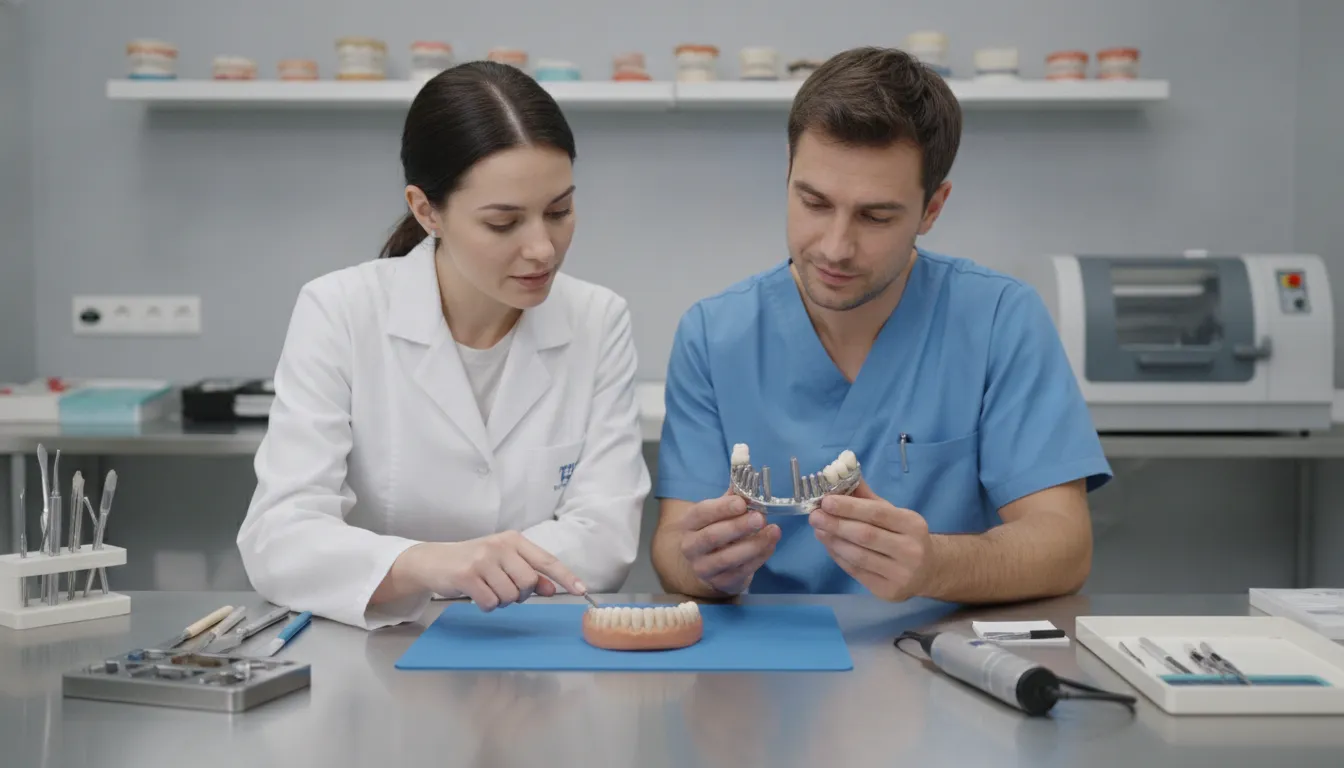
AvaDent's monolithic XCL PMMA is a stronger denture material option for complete-denture cases when a high-density, single-piece construction fits the clinical design. The material is milled from a pre-polymerized block rather than assembled from separately bonded denture teeth and a processed base. The monolithic architecture reduces reliance on a separate tooth-to-base bond and provides a continuous material structure across the denture.
AvaDent describes XCL as a high-density PMMA material with a virtually porosity-free surface and ultra-low residual monomer content. Its published product information also states that XCL complete dentures can be designed to a minimum thickness of 1.5 mm, subject to clinical and design requirements. These features may be relevant when a case requires efficient use of restorative space or when a clinician is comparing milled and conventional workflows.
Why a single block matters
Conventional processing forms the denture base during laboratory fabrication, then connects prefabricated teeth to that base. The result can be clinically successful, but the workflow has more interfaces and processing variables to manage. A monolithic denture is carved from one block of material, so the teeth and base are not joined through a conventional bonded interface. That difference does not remove the need for sound design or follow-up, but it changes the failure modes a team considers.
For clinicians reviewing existing fractures, ask where the failure began. Was it in the base, near a thin flange, around an implant attachment, at an acrylic repair, or at the tooth-to-base interface? The answer can help determine whether a change in material, design, prosthesis type, or all three is appropriate.
How does material choice affect denture thickness and comfort?
Available restorative space is a clinical constraint, not simply a cosmetic preference. A denture that must be thickened to compensate for weaker material can affect tongue space, phonetics, occlusion, and patient acceptance. A high-strength material may permit a more conservative design in selected areas. But the final thickness still depends on the arch form, anatomy, occlusion, support, and the manufacturer's design parameters.
For complete dentures, a monolithic milled PMMA workflow can help the laboratory work from a consistent digital design. AvaDent identifies a 1.5 mm minimum thickness for its XCL material, compared with 2.0 mm cited in the company's product information for 3D-printed dentures. These are product and process specifications, not universal clinical targets. The prescribing clinician and laboratory should confirm the appropriate thickness for the specific case.
Plan strength without unnecessary bulk
The goal is not to make every denture as thin as possible. The goal is to place material where it supports function while avoiding unnecessary bulk. That requires attention to the neutral zone, flange contour, tooth position, polished-surface form, occlusal scheme, and areas of concentrated stress. A design review should consider whether reducing thickness improves comfort without compromising support or durability.
For a broader discussion of treatment pathways, compare the prosthesis type before comparing material names. AvaDent's guide to fixed and removable full-arch prosthetics can help frame that decision. A complete denture and an implant-supported full-arch prosthesis experience different support, retention, and loading conditions, so they should not be judged by the same material checklist.
Does a stronger denture material improve hygiene?
Strength and hygiene are separate properties, but material surface characteristics can influence how a denture is cleaned and maintained. A smoother, less porous surface may provide fewer irregularities for stain and biofilm retention than a rougher surface. It does not replace a patient-specific hygiene protocol, professional review, or appropriate cleaning of the prosthesis and supporting tissues.
AvaDent describes XCL as a high-density, virtually porosity-free material designed to resist bacteria and staining. Those are company product claims and should be discussed accurately, without presenting them as a guarantee against denture-related inflammation or microbial colonization. Patients can still accumulate deposits, and implant-supported prostheses require special attention around attachments, bars, frameworks, and peri-implant tissues.
Surface, maintenance, and patient instruction
A material decision should be paired with a maintenance plan. Discuss daily removal and cleaning instructions, the products that should be avoided, overnight storage when appropriate, and the signs that warrant an examination. For implant-supported prostheses, the plan should also address access for cleaning around the implant components and the recall schedule.
Hygiene should be assessed alongside surface roughness, fit, contour, access, and patient dexterity. A material with favorable surface characteristics cannot compensate for an overcontoured design or an impractical cleaning routine. The most defensible clinical message is that material can support hygiene, while design and patient instruction determine whether that potential is realized.
For clinicians comparing cleaning considerations in removable implant cases, AvaDent's overdenture attachment systems guide provides a related framework for retention, access, and maintenance planning.
When does titanium reinforcement make sense for implant-supported prostheses?
Titanium reinforcement belongs in a different discussion from complete-denture base material. Implant-supported prostheses transmit forces through implants, attachments, and the framework. They may require a rigid substructure that distributes load across the arch while preserving space for the teeth, acrylic, soft tissue, and cleaning access.
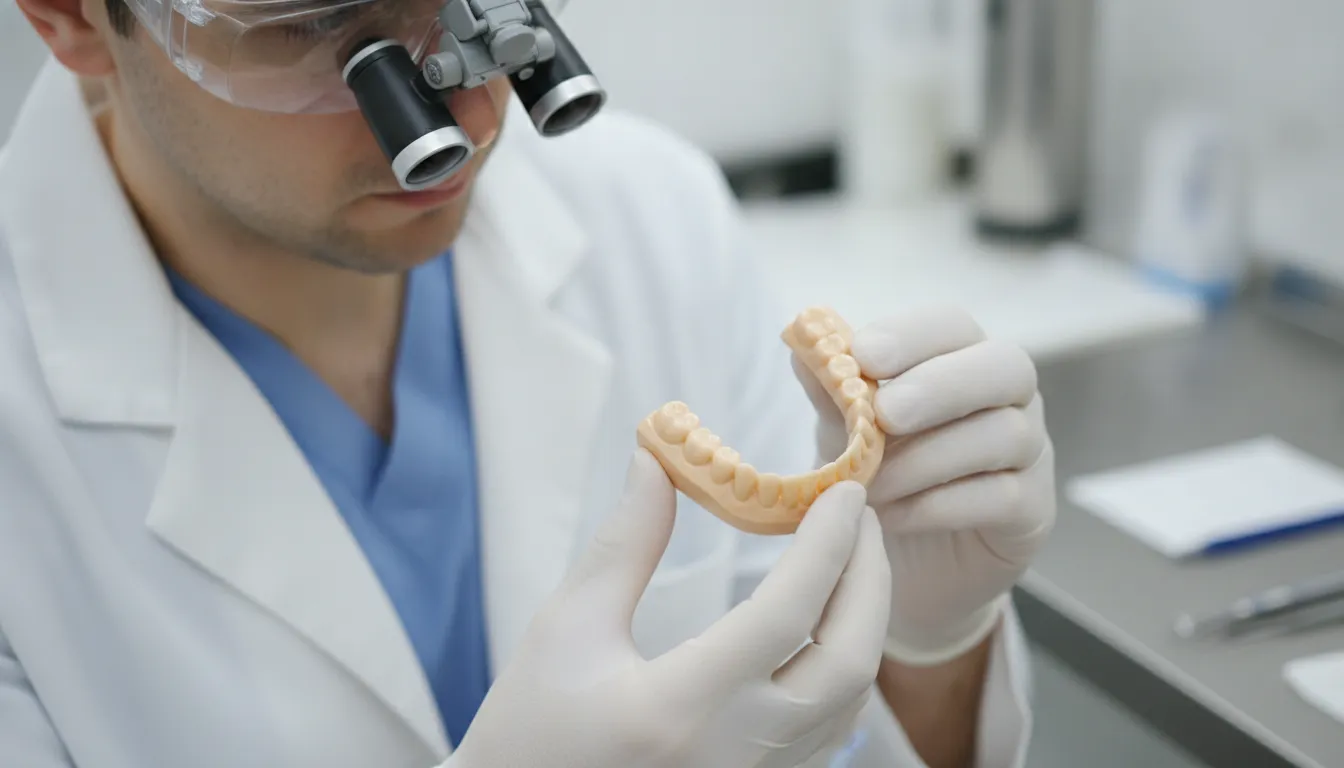
AvaMax is an implant-supported option that combines a 3D-printed titanium framework with precision-milled XCL PMMA. AvaDent's product information describes this as a hybrid construction in which the titanium framework reinforces the prosthesis and the PMMA monolith provides the visible tooth and base anatomy. The framework does not turn every case into a fracture-proof restoration. It is one part of a larger treatment plan that includes implant position, passive fit, occlusion, cantilever control, hygiene access, and recall.
Complete dentures and implant-supported prostheses are not the same indication
A complete denture is primarily supported by the patient's soft tissue and residual ridge. An implant-supported overdenture or hybrid prosthesis uses implants and its attachment or framework design to provide retention and support. A material that is appropriate for a complete denture should not be assumed to be appropriate for a fixed or removable implant prosthesis.
Clinicians evaluating AvaMax can review the AvaMax implant-supported dentures guide for more detail about the titanium framework, digital workflow, and prosthesis-specific planning. The correct question is whether a titanium-reinforced hybrid matches the patient's anatomy, implant plan, restorative space, hygiene ability, and long-term maintenance needs.
How can material selection improve the clinical workflow?
Material selection affects more than the finished prosthesis. It influences records, design approval, try-in decisions, manufacturing steps, adjustment expectations, repair planning, and replacement strategy. A digital workflow can also preserve design records that support a future remake or replacement, subject to the manufacturer's record-retention process and the clinical information available.
Verification moves earlier in the process
With a digital denture workflow, the team can review the proposed tooth arrangement, occlusion, esthetics, and design before final manufacturing. That creates an opportunity to resolve concerns earlier rather than discovering them only after delivery. It does not eliminate the need for clinical verification. The clinician remains responsible for evaluating records, approving the design, assessing the fit, and making appropriate adjustments.
Material and workflow decisions should be documented together
When a case has a prior fracture, document the location and likely contributing factors. Record the prosthesis type, implant or tissue support, occlusal considerations, available space, material selected, and the maintenance conversation. This documentation supports a more useful review than recording only that a stronger resin was requested.
For practices considering a transition to digital fabrication, the decision should also include appointment design and laboratory communication. Define which records are required, who approves the digital preview, how try-ins are handled, and what information is retained for a future replacement. A predictable workflow is a clinical asset only when the team knows where each decision is made.
A practical stronger denture material checklist
Use the following questions to structure a material discussion with the clinician, laboratory, and patient:
- What prosthesis is being fabricated? Identify a complete denture, immediate denture, removable overdenture, or fixed hybrid prosthesis.
- Where has the previous prosthesis failed? Distinguish base fracture, tooth separation, framework or attachment concerns, wear, staining, and fit problems.
- What forces and support conditions apply? Review occlusion, ridge anatomy, implant distribution, cantilevers, parafunction, and available restorative space.
- What does the material evidence actually show? Separate in vitro flexural-strength results from broader clinical claims and confirm the tested formulation.
- Can the design support hygiene and comfort? Evaluate thickness, contours, access, polished surfaces, phonetics, and patient dexterity.
- What will the workflow require? Confirm records, design review, approval, try-in, manufacturing, delivery, adjustment, and future replacement steps.
- How will the case be maintained? Establish recall, cleaning, repair, and implant or tissue-support monitoring before delivery.
Talk with AvaDent about the right denture material for your clinical workflow
This checklist keeps the conversation focused on the entire prosthesis rather than on a material label alone. For additional context on AvaDent's digital manufacturing approach, review its hybrid dental solutions and full-arch workflow information.
Frequently Asked Questions
What is the strongest material for dentures?
No single material fits every denture indication. Choose construction based on prosthesis type, loading, available space, and maintenance.
Is PMMA a durable material for dentures?
PMMA can be durable when its formulation, processing method, design, and indication are appropriate. AvaDent's XCL material is a high-density, pre-polymerized PMMA used in monolithic milled dentures. Durability still depends on the final design, occlusion, support, fit, patient use, and follow-up. Material strength does not remove the need for case-specific clinical judgment.
Are titanium-reinforced dentures appropriate for every case?
No. Titanium reinforcement is intended for selected implant-supported designs, not as a universal replacement for complete-denture materials. Assess implant position, restorative space, hygiene access, occlusion, framework needs, and maintenance capacity.
Does a stronger denture material make hygiene easier?
Favorable surface characteristics can support hygiene, but they do not guarantee a clean prosthesis. Contour, fit, access, patient dexterity, cleaning instructions, and recall are equally important. Implant-supported prostheses also require cleaning around attachments, frameworks, and peri-implant tissues. Discuss the material and the maintenance plan together.
Discuss Your Denture Manufacturing Workflow with AvaDent
Material selection is one part of a broader clinical and laboratory decision. AvaDent can help dental professionals compare complete-denture, overdenture, and hybrid workflows. Clarify the information needed for a digital case, and identify the product pathway that fits the prosthesis type. Contact AvaDent to discuss your case and workflow.